
Besuchen Sie Open iT auf der IAITAM ACE 2026, der führenden Veranstaltung für Fachleute im Bereich IT-Asset-Management, die sich in der komplexen Audit-Landschaft von heute zurechtfinden müssen. Erfahren Sie, wie Unternehmen mithilfe detaillierter Lizenzanalysen von einer reaktiven Audit-Abwehr zu einer proaktiven, datengestützten Compliance übergehen.
12. bis 14. Mai 2026
Das M Resort Spa und Casino
Las Vegas, Nevada
BRONZE-SPONSOR
Ganz gleich, ob Sie Abfall reduzieren, die Einhaltung von Vorschriften verbessern oder die Rendite Ihrer Softwareinvestitionen maximieren möchten – unser Team steht bereit, um Ihnen praktische Strategien vorzustellen, die genau auf Ihre Umgebung zugeschnitten sind. Besuchen Sie unseren Stand auf der IAITAM, und wir zeigen Ihnen, wie Sie die volle Kontrolle über Ihre Software-Assets erlangen und verborgene Einsparpotenziale erschließen können.
VORTRAGSSITZUNG
Software-Audits finden nicht mehr nur gelegentlich statt. Sie sind häufig, komplex und finanziell von großer Bedeutung.
In dieser Sitzung zeigt Open iT, wie detaillierte Lizenzanalysen ITAM-Teams dabei helfen, von einer reaktiven Audit-Abwehr zu einer proaktiven Kontrolle überzugehen.
Erfahren Sie, wie Sie:
Referenten:
13. Mai 2026 | Mittwoch
11:15 Uhr – 12:15 Uhr
Das M Resort Spa und Casino
Las Vegas, Nevada
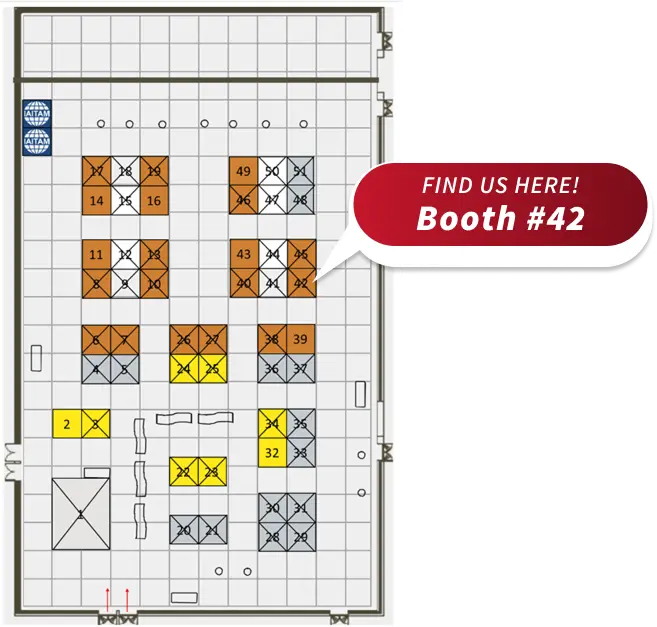
Nehmen Sie an der IAITAM ACE 2026 teil? Lassen Sie uns schon vorab Kontakt aufnehmen, bevor es hektisch wird. Wenden Sie sich vor der Veranstaltung an unser Team oder schreiben Sie uns auf LinkedIn, um einen Termin für ein Treffen in Las Vegas zu vereinbaren. Sie können uns während der Konferenz auch am Stand Nr. 42 besuchen. Wir zeigen Ihnen gerne, wie detaillierte Lizenzanalysen Ihnen helfen können, die Compliance zu stärken, das Audit-Risiko zu senken und Ihre Softwareausgaben zu optimieren.
Aus Sicherheitsgründen lösen Sie bitte dieses einfache Rätsel, um zu bestätigen, dass Sie ein Mensch sind, bevor ein OTP gesendet wird.
Open iT
David Boyle
Dr. Dávid Felhős, Karman Mechanics
As engineering simulation becomes increasingly central to product development, organizations are facing growing pressure to scale computational workloads across shared on-premise and cloud-based environments. While advances in solver capability and compute infrastructure have expanded simulation capacity, resource availability is now frequently constrained by licensing and entitlement models that are tightly coupled to runtime behavior. In complex simulation workflows, unmanaged resource consumption can introduce variability in execution time, reduce throughput, and compromise the predictability of engineering schedules.
This presentation introduces a data-driven governance approach for managing simulation resource consumption as an integral part of the simulation process rather than an external administrative function. The framework treats licensing constraints as a system-level parameter, similar to compute availability or memory limits, and integrates consumption awareness directly into simulation workflow planning and execution. By correlating workload characteristics, such as concurrency, wall time, solver class, and execution context, with observed consumption patterns, the approach enables engineers and simulation managers to anticipate constraints before they impact critical project milestones.
The methodology is based on the collection and normalization of granular telemetry from execution environments and resource management layers. These data streams are aggregated into consumption profiles that describe how different classes of simulation workloads behave under varying operational conditions. Predictive models derived from historical execution data are then used to support proactive decision-making, including workload prioritization, queue management, and adaptive scheduling. Importantly, this governance layer operates independently of specific solvers or licensing technologies, ensuring portability across different simulation domains.
From a systems perspective, the presentation outlines an architecture that integrates data collection, analytics, and policy enforcement with existing simulation process infrastructure. Lightweight policy mechanisms are used to translate predictive insights into runtime controls, allowing organizations to balance competing objectives such as throughput, fairness, and schedule adherence. Particular emphasis is placed on maintaining engineer autonomy while introducing guardrails that prevent resource contention during peak demand periods.
Applied implementations of this framework demonstrate improved stability in simulation execution and reduced variability in job turnaround times. Rather than optimizing for cost alone, the analysis focuses on operational performance indicators that are directly relevant to engineering outcomes, including queue stability, utilization consistency, and predictability of simulation delivery. These improvements support more reliable design iteration cycles and reduce the risk of downstream delays in product development.
The session concludes by presenting a set of practical metrics and governance principles that can be adopted by organizations seeking to scale simulation workloads in a controlled and transparent manner. Attendees will gain insight into how data-driven governance can be embedded within simulation processes to support resilient, scalable, and well-coordinated engineering operations, particularly in environments where shared resources and complex workflows are the norm.