




IAITAM ACE 2026

Join Open iT at IAITAM ACE 2026, the premier event for IT asset management professionals navigating today’s complex audit landscape. Discover how organizations are shifting from reactive audit defense to proactive, data-driven compliance using granular license analytics.
May 12–14, 2026
The M Resort Spa and Casino
Las Vegas, Nevada
Days
Hours
Minutes
Seconds
BRONZE SPONSOR
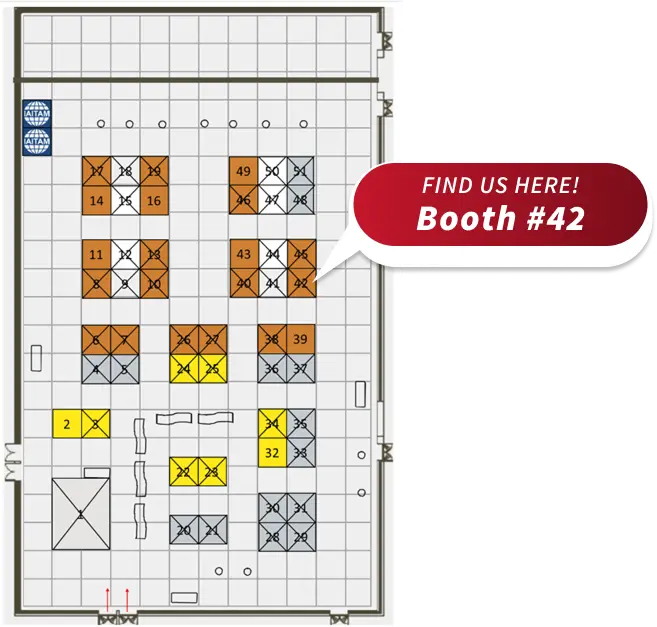
Visit Us At Booth #42
Whether you’re looking to reduce waste, improve compliance, or maximize ROI on your software investments, our team is ready to share practical strategies tailored to your environment. Stop by our booth at IAITAM and we’ll show how you can take full control of your software assets and unlock hidden cost savings.
SÉANCE D'INFORMATION
Mastering Software Audits with Granular License Analytics
Software audits are no longer occasional. They’re frequent, complex, and financially significant.
In this session, Open iT shows how granular license analytics helps ITAM teams shift from reactive audit defense to proactive control.
Learn how to:
- Gain full visibility into license usage across users, features, and environments
- Identify compliance risks early and reduce exposure
- Align license entitlements with actual usage to cut unnecessary spend
- Deliver audit-ready reports backed by defensible data
- Walk away with practical strategies to strengthen compliance, reduce audit costs, and turn audit readiness into a strategic advantage.
Presenters:
- Malou Albendia — Solution Architect, Open iT
May 13, 2026 | Wednesday
11:15 AM – 12:15 PM
The M Resort Spa and Casino
Las Vegas, Nevada
Presented & Authored By
Open iT
David Boyle
Session Chair
Dr. Felhős Dávid, Karman Mechanics
Abstract
As engineering simulation becomes increasingly central to product development, organizations are facing growing pressure to scale computational workloads across shared on-premise and cloud-based environments. While advances in solver capability and compute infrastructure have expanded simulation capacity, resource availability is now frequently constrained by licensing and entitlement models that are tightly coupled to runtime behavior. In complex simulation workflows, unmanaged resource consumption can introduce variability in execution time, reduce throughput, and compromise the predictability of engineering schedules. This presentation introduces a data-driven governance approach for managing simulation resource consumption as an integral part of the simulation process rather than an external administrative function. The framework treats licensing constraints as a system-level parameter, similar to compute availability or memory limits, and integrates consumption awareness directly into simulation workflow planning and execution. By correlating workload characteristics—such as concurrency, wall time, solver class, and execution context—with observed consumption patterns, the approach enables engineers and simulation managers to anticipate constraints before they impact critical project milestones. The methodology is based on the collection and normalization of granular telemetry from execution environments and resource management layers. These data streams are aggregated into consumption profiles that describe how different classes of simulation workloads behave under varying operational conditions. Predictive models derived from historical execution data are then used to support proactive decision-making, including workload prioritization, queue management, and adaptive scheduling. Importantly, this governance layer operates independently of specific solvers or licensing technologies, ensuring portability across different simulation domains. From a systems perspective, the presentation outlines an architecture that integrates data collection, analytics, and policy enforcement with existing simulation process infrastructure. Lightweight policy mechanisms are used to translate predictive insights into runtime controls, allowing organizations to balance competing objectives such as throughput, fairness, and schedule adherence. Particular emphasis is placed on maintaining engineer autonomy while introducing guardrails that prevent resource contention during peak demand periods. Applied implementations of this framework demonstrate improved stability in simulation execution and reduced variability in job turnaround times. Rather than optimizing for cost alone, the analysis focuses on operational performance indicators that are directly relevant to engineering outcomes, including queue stability, utilization consistency, and predictability of simulation delivery. These improvements support more reliable design iteration cycles and reduce the risk of downstream delays in product development. The session concludes by presenting a set of practical metrics and governance principles that can be adopted by organizations seeking to scale simulation workloads in a controlled and transparent manner. Attendees will gain insight into how data-driven governance can be embedded within simulation processes to support resilient, scalable, and well-coordinated engineering operations, particularly in environments where shared resources and complex workflows are the norm.
Connect with Our Team
Attending IAITAM ACE 2026? Let’s connect before things get busy. Reach out to our team ahead of the event or message us on LinkedIn to set up a time to meet in Las Vegas. You can also visit us at Booth #42 during the conference. We’d be glad to walk you through how granular license analytics can help you strengthen compliance, reduce audit risk, and optimize software spend.