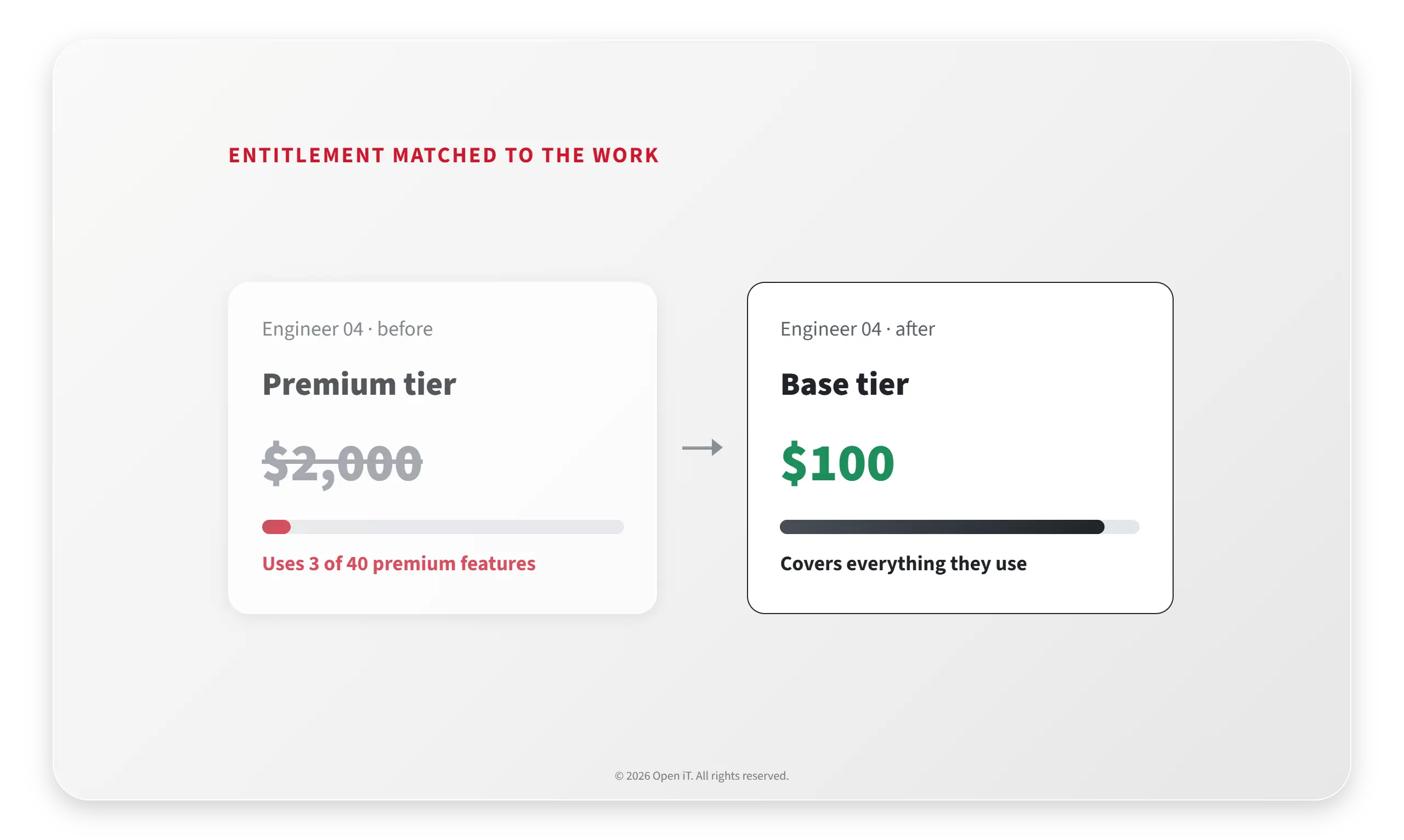
A $2,000 seat doing $100 of work is still a $2,000 line on the renewal.
Open iT meters ETABS, SAP2000, STAAD.Pro, RAM and Robot per application and per user, and pulls every license server into one dashboard. So an engineer parked on a premium tier they barely touch stops hiding, the entitlement gets matched to the real work, and scores of scattered servers stop being scores of separate spreadsheets. Burns & McDonnell did exactly this and cut as much as a quarter of its engineering software spend.
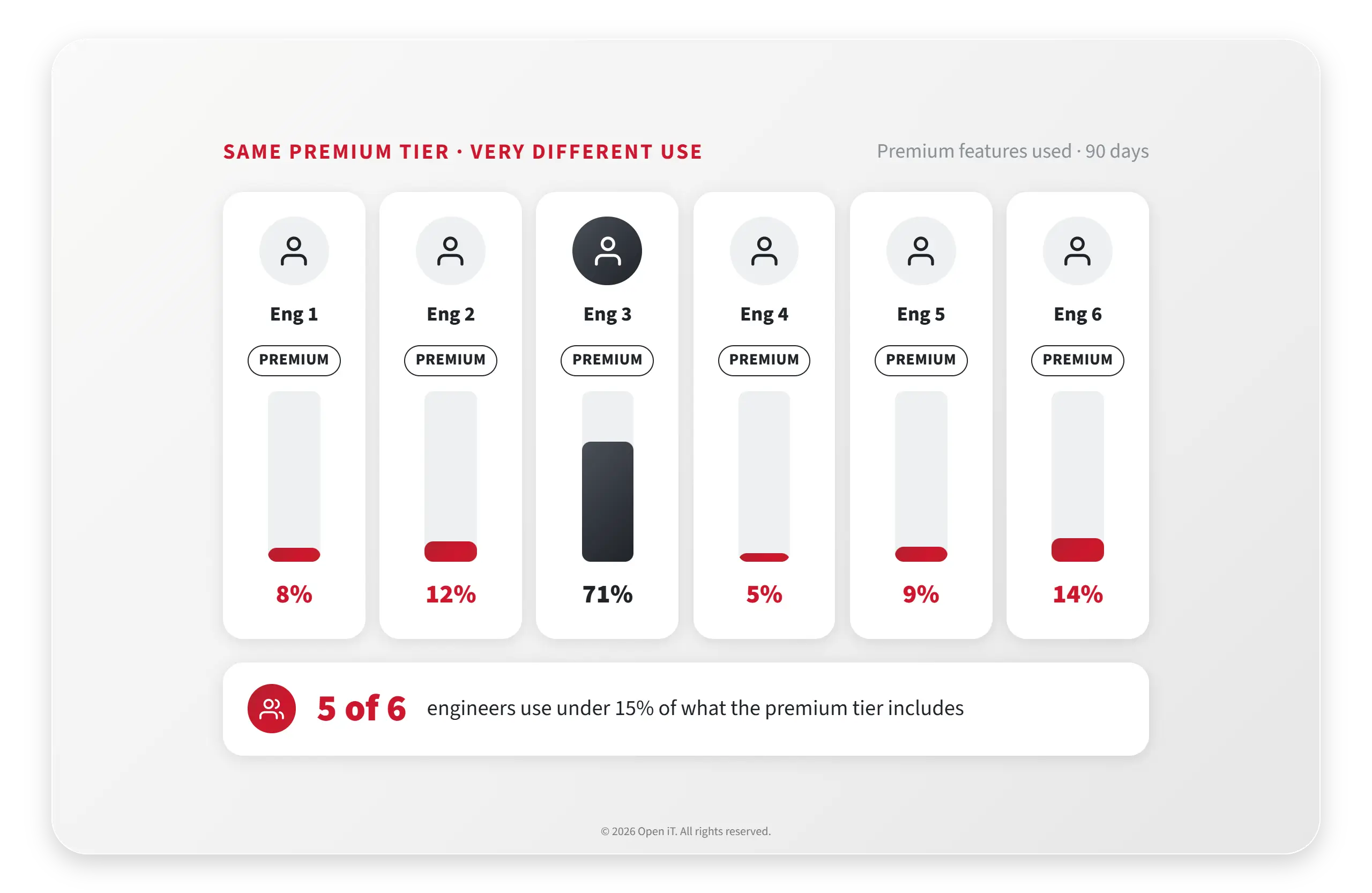
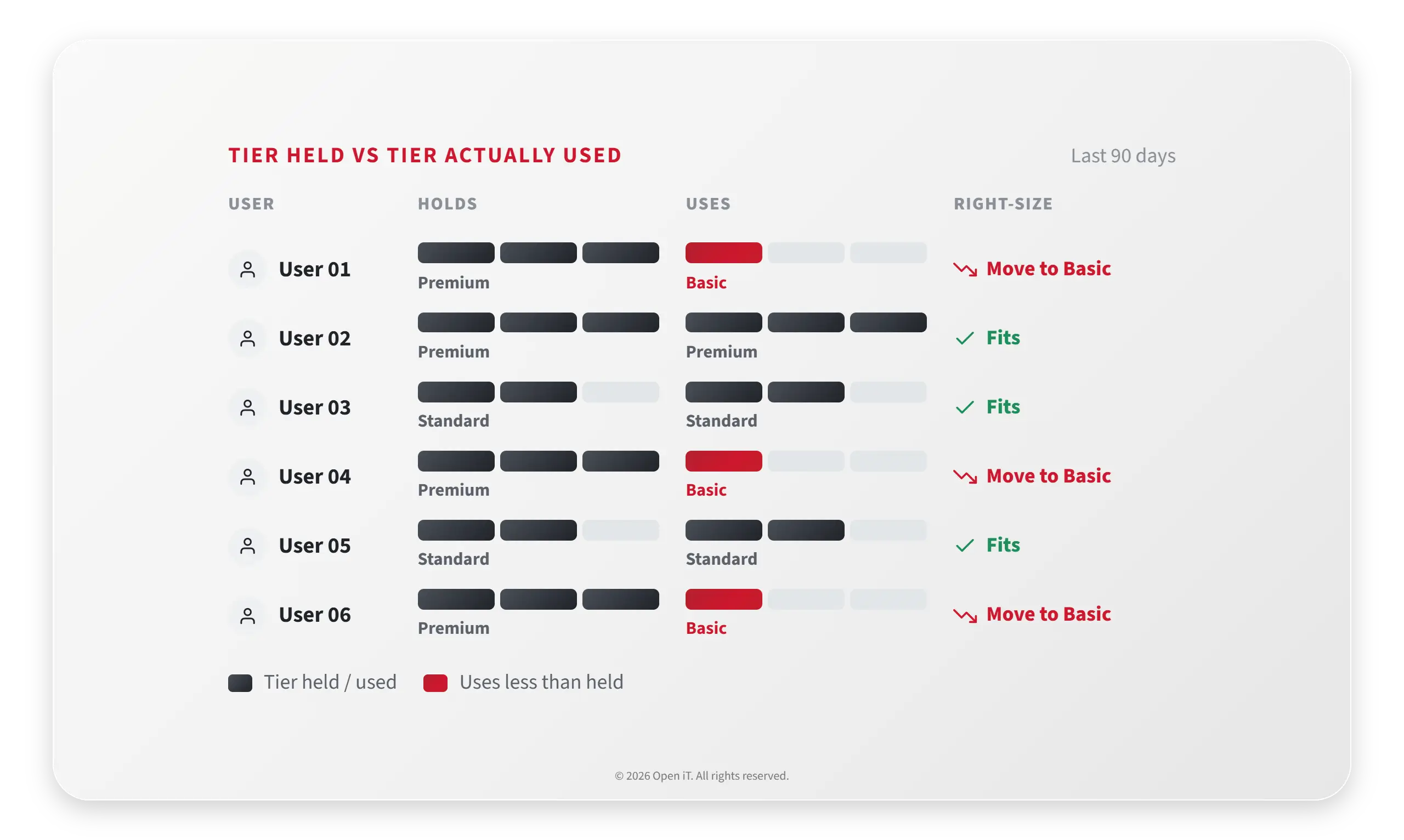
A structural group standardizes on the full suite so nobody is ever blocked at a deadline. Most engineers then use a fraction of it: a detailer sits on a premium analysis seat, an occasional user holds the same license as a daily modeler. The license server records a checkout. It cannot tell you the work only ever needed the base tool.
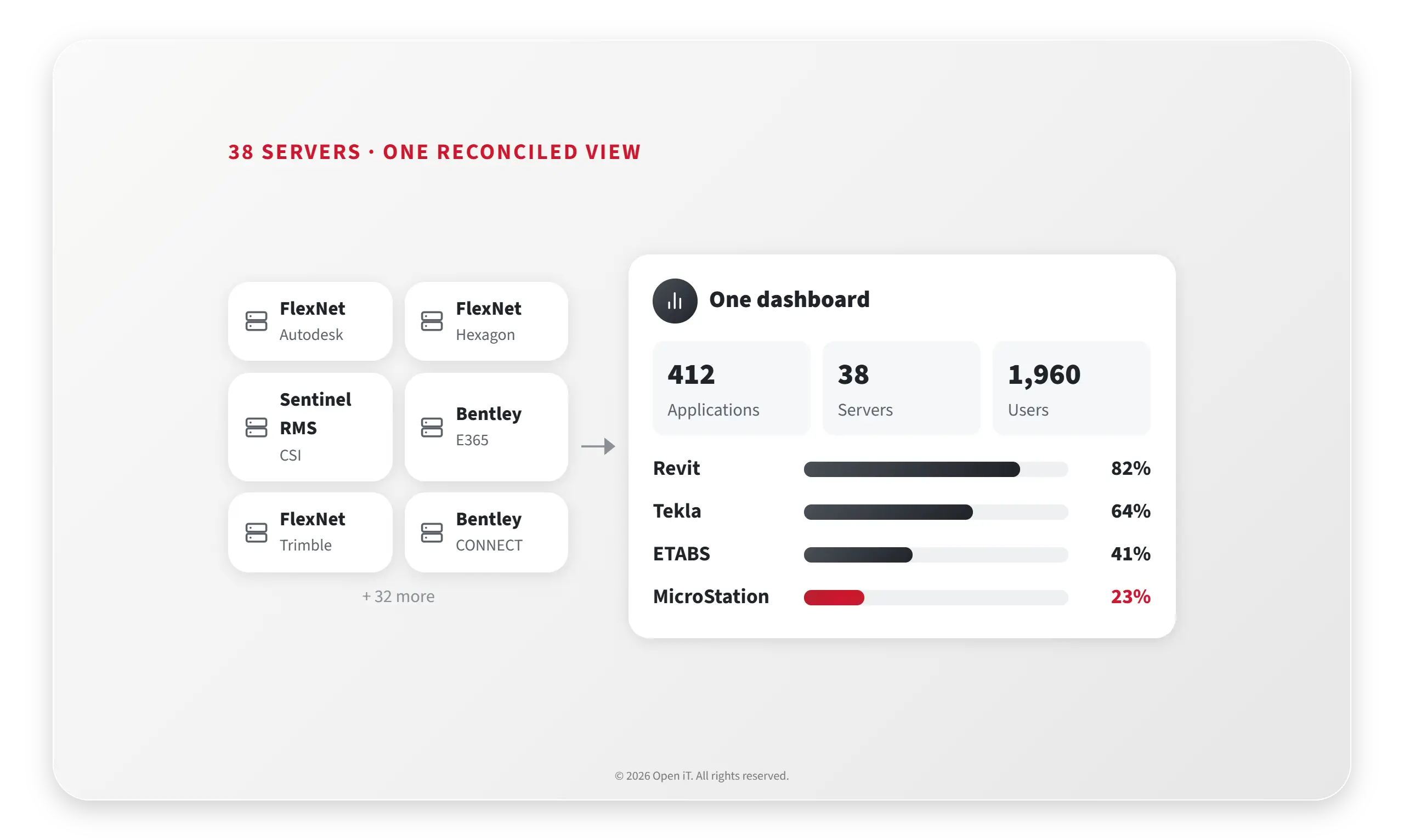
Now multiply that by the estate. A large structural and civil practice runs hundreds of design applications across scores of license servers: Autodesk on FlexNet, CSI on Sentinel RMS, Bentley on its own system, each with its own report. No single number reconciles them, so the renewal is argued application by application, on the vendor’s quote.
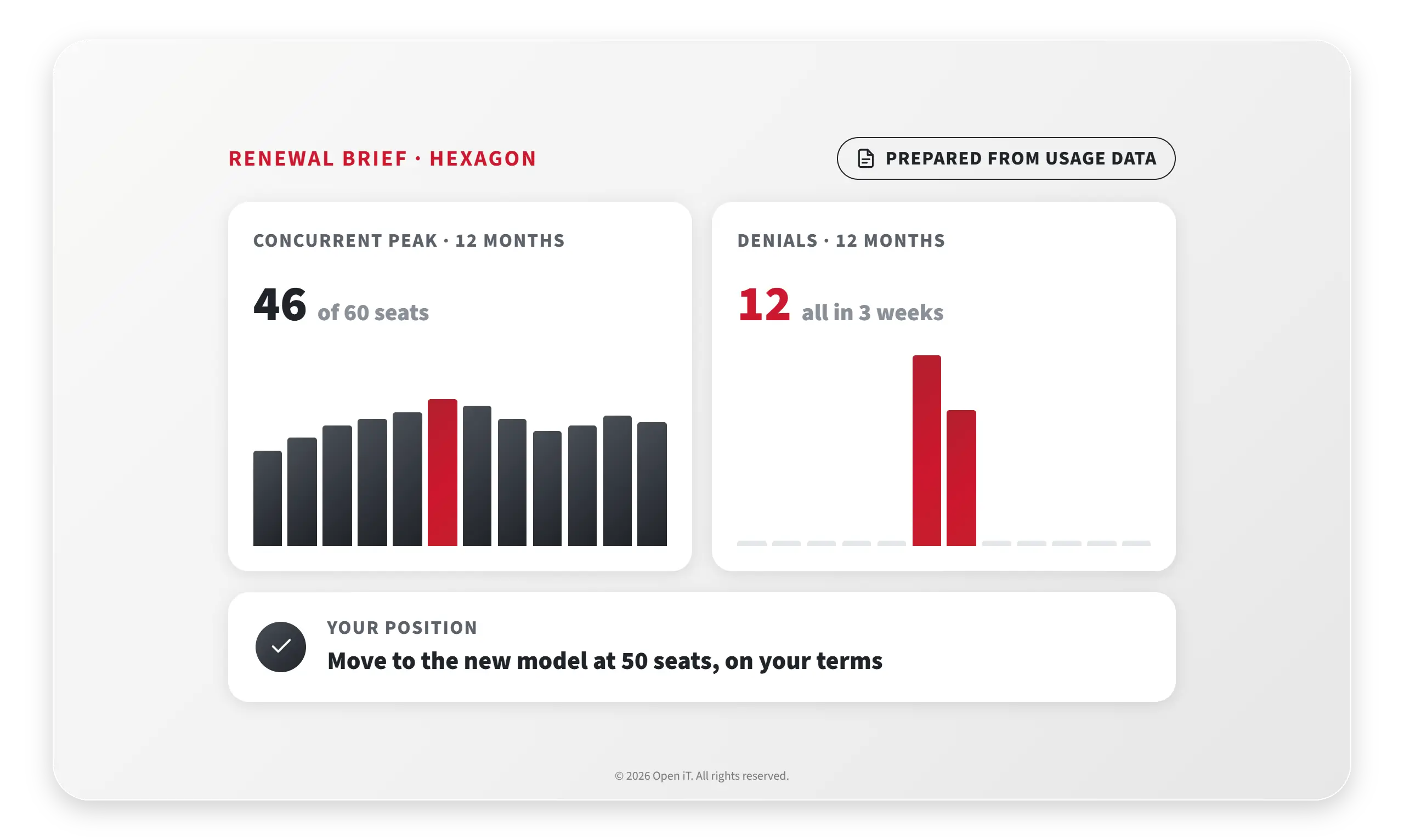
And at renewal the vendor has the contracted data while you have a spreadsheet. Denial counts and peak-usage numbers are the evidence that actually moves a negotiation, and most teams walk in without them.
Was Open iT leistet
1
See what each engineer actually uses.
True Active Usage reads real activity on the host, and per-application, per-user reporting shows who works a seat hard and who barely opens it. That is the visibility you need to tell a premium seat doing premium work from one that is not.
2
Match the entitlement to the responsibility.
Once you can see who uses what, an engineer on a top-tier seat whose work only needs the base tool can be moved down. At Burns & McDonnell that kind of match took some users from a $2,000 license to a $100 one.
3
See every license server as one.
Open iT consolidates FlexNet, Sentinel RMS and Bentley servers into a single dashboard, per application and per user, so hundreds of applications across scores of servers become one reconciled view instead of scores of separate reports.
4
Take the vendor’s own numbers to the renewal.
Concurrent-peak demand and denial counts are the currency a vendor negotiation runs on. Burns & McDonnell used denial and peak-usage data to move into Hexagon’s new licensing model on its own terms rather than the vendor’s.
What the license server sees vs. what Open iT sees
A single license server
Open iT, across every server
A seat is checked out
How much of that seat, and which application, the user actually works
Each of scores of servers reports on its own
One dashboard across every server, application and user
Everyone standardized on the premium tier to be safe
Who needs the premium tier and who only ever needs the base tool
The vendor brings the usage data to the renewal
You bring concurrent-peak and denial counts to the table
Data talks louder than opinions.
— Michael Allen, Director of Engineering Technology, Burns & McDonnell
Haben Sie Fragen? Wenden Sie sich an einen Lizenzspezialisten.
How many of your premium seats are doing base-tier work?
Structural teams often standardize on the top tier so nobody is blocked at a deadline. Group your engineers by the work they actually do and see what the extra tier costs each year.
$
The full analysis tier most engineers hold today.
$
The lower tier that covers modeling, checking or viewing.
Engineers on premium seats
One row per group with similar work. Choose the tier their work actually needs.
$0
a year paid for tier and seats the work does not need
Spend today
$0
Spend once matched
$0
Seats doing base-tier work or none
0 of 0
Lower spend on this application
0%
Premium work on a premium seatBase-tier work on a premium seatSeat no longer needed
Wie dies berechnet wird
Spend today = seats × premium price. Matched spend = premium-work seats × premium price + base-work seats × base price. Seats no longer needed cost nothing once matched.
The default prices echo a published Open iT customer case: at Burns & McDonnell, some users were able to adjust from a $2000 license down to a $100 license, a 95% reduction. The case does not state the billing period, so replace them with your own annual contract prices. Burns & McDonnell customer story
Open iT reports usage per application and per user, so the grouping can come from measured usage rather than guesswork. Level 2 measures True Active Usage from keyboard, mouse, CPU and I/O activity on the host. docs.openit.com — Reporting Services
Results are estimates from the values you enter. Tier downgrades depend on each vendor’s terms.
Häufig gestellte Fragen
How is this different from just reclaiming idle seats?
Reclaiming idle seats reduces how many seats you own. Entitlement matching reduces the tier you pay for per engineer: a premium seat doing base-tier work is waste even when it is busy. Open iT surfaces both, so you fix the count and the tier.
Can Open iT show usage per user, not just a checkout count?
Yes. True Active Usage reads real activity on the host, and Level 1 and Level 2 reporting break usage down per application and per user, so a seat in daily heavy use is clearly separated from one that is rarely opened.
We run Autodesk, CSI and Bentley on different license managers. Can you see across them?
Yes. Open iT meters FlexNet, Sentinel RMS and Bentley together and consolidates them into one dashboard, per application and per user, regardless of which manager issued the seat.
Which structural applications are supported?
CSI Cloud (ETABS, SAP2000) and Bentley (STAAD.Pro, RAM) are metered in v10.2; Autodesk Robot rides the Autodesk/FlexNet connector. Open iT meters the license manager behind Oasys GSA. LUSAS and 12d Model are not yet confirmed.
Your renewal is coming, and the vendor already has its quote prepared. Burns & McDonnell walked in with its own: 400 applications, 150 servers, every entitlement matched to real usage, and cut as much as a quarter of its engineering software spend. The same dashboard turns your estate from the vendor’s story into your evidence, because data talks louder than opinions.