

Subsurface
Eleven vendors, one subsurface budget, and no single record of what got used.
Open iT meters Petrel, Techlog, tNavigator and the PetEx suite on one record across the license managers in your estate, so the next renewal is set by measured use instead of last year’s seat count.
- See your subsurface applications in one usage history, not one console per vendor
- Tell a Petrel window left open from an engineer actually interpreting
- Hand idle seats back with suspend, and leave the work on the screen
A subsurface estate can carry an eight-figure modeling line and still have no number anyone in the building can check.
Petrel and Techlog sit on FlexNet. tNavigator has its own license manager. The PetEx suite runs on HASP. Each console covers one vendor, on its own definition of use, on its own schedule, and not one of them says whether a checked-out seat was doing work. So the renewal gets set by the seat count you bought last year, and the vendor’s account manager is the only person in the room who arrives with data.
The gap is measurable. Open iT sees idle rates of 20 to 40 percent across engineering estates, and subsurface seats are among the most expensive an operator buys. Devon Energy put 11 vendors and modules from mixed Flexera and non-Flexera license managers onto one platform and cut its subsurface software budget by 20 percent.
What Open iT Does
1
Put every subsurface vendor on one record.
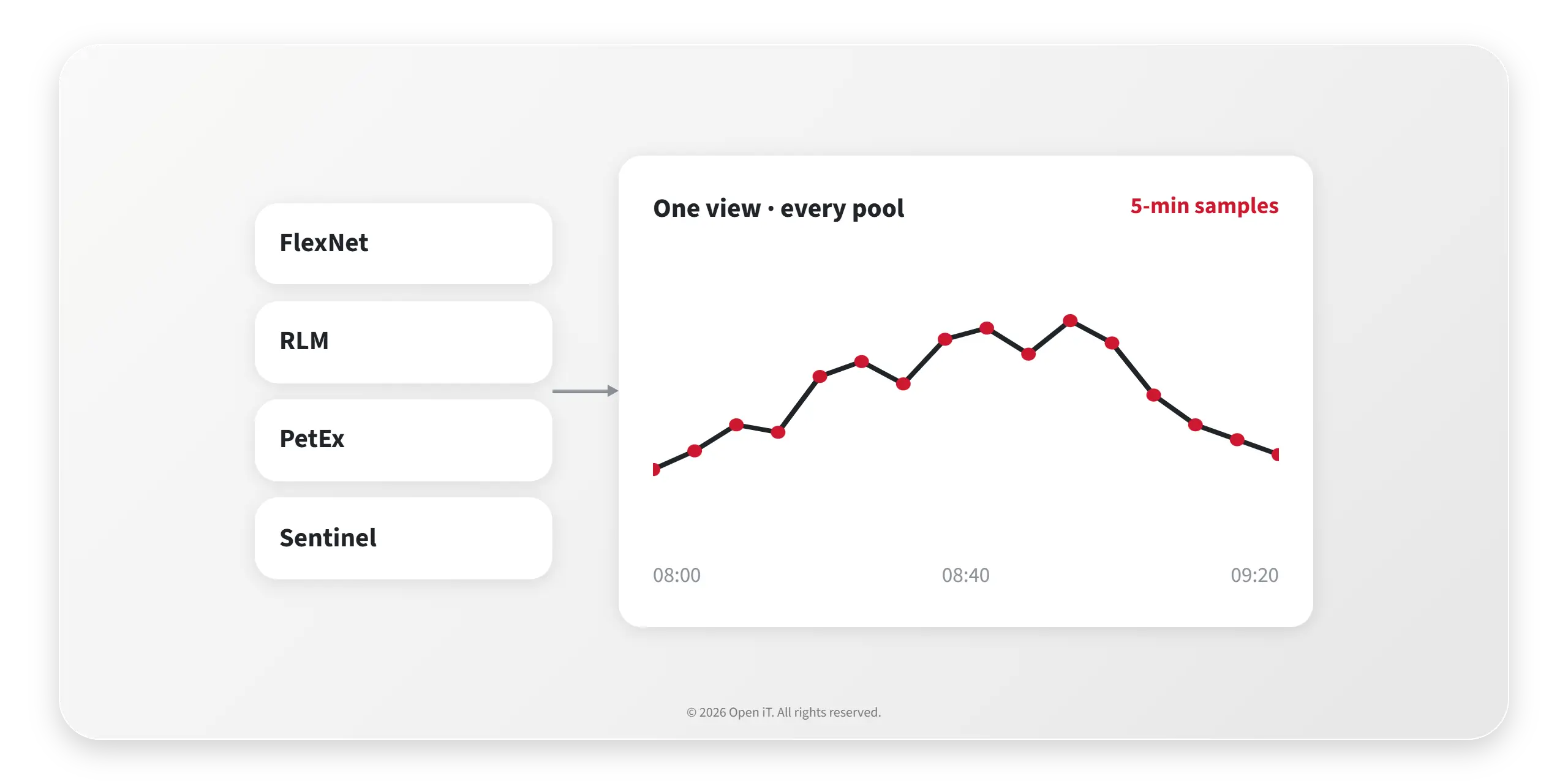
LicenseAnalyzer™ meters more than 6,000 applications across 90+ supported license managers, so Petrel and Techlog on FlexNet, tNavigator on Tnav LM and the PetEx suite on HASP all report into the same history. It polls hourly at 5-minute sample intervals.
2
Tell an open session from an engineer working in it.
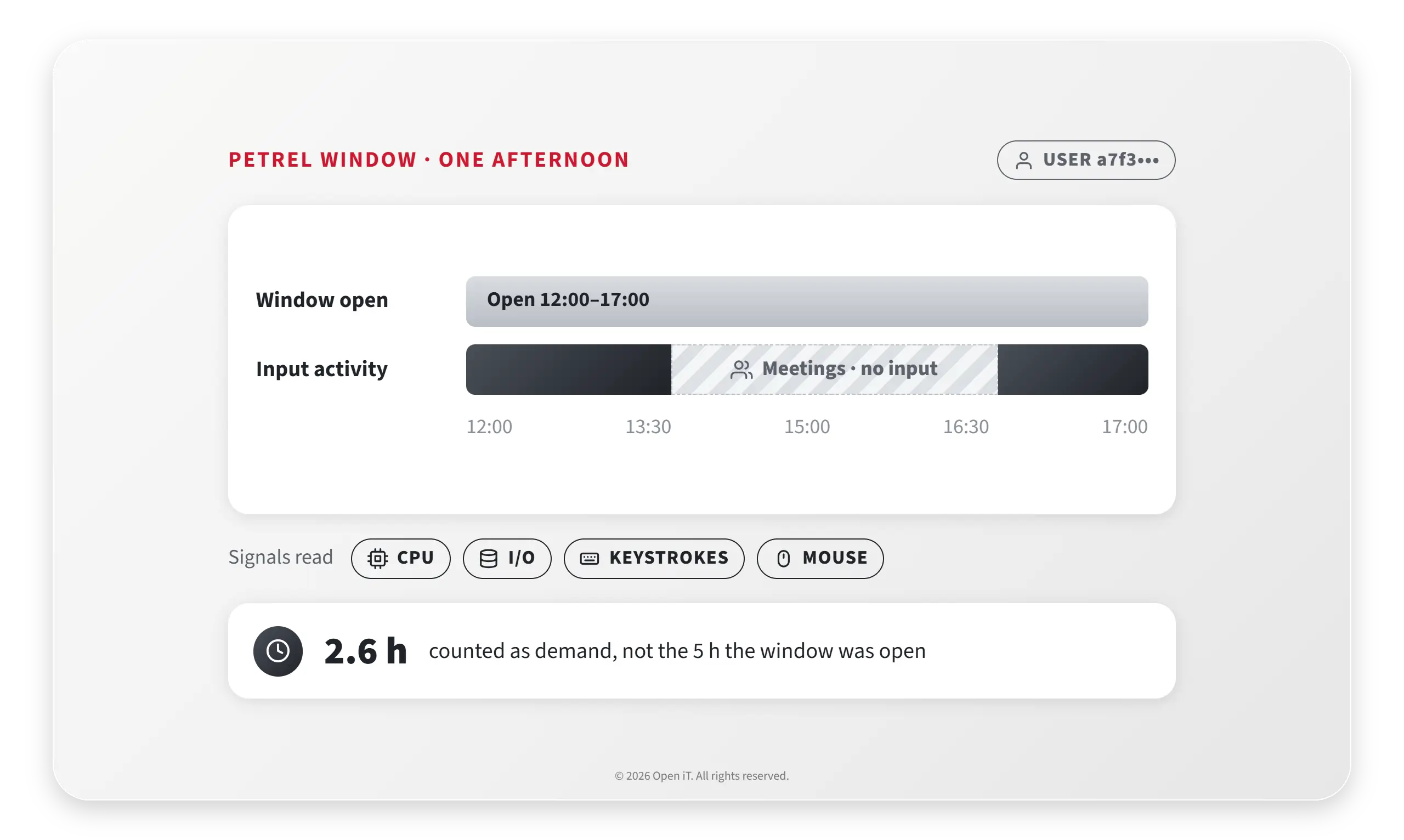
True Active Usage reads CPU, I/O, keystroke and mouse activity on the host, so a Petrel window left open through an afternoon of meetings stops counting as demand. Usernames can be anonymized, reversibly or irreversibly.
3
Hand the idle Petrel seat back without losing the work.
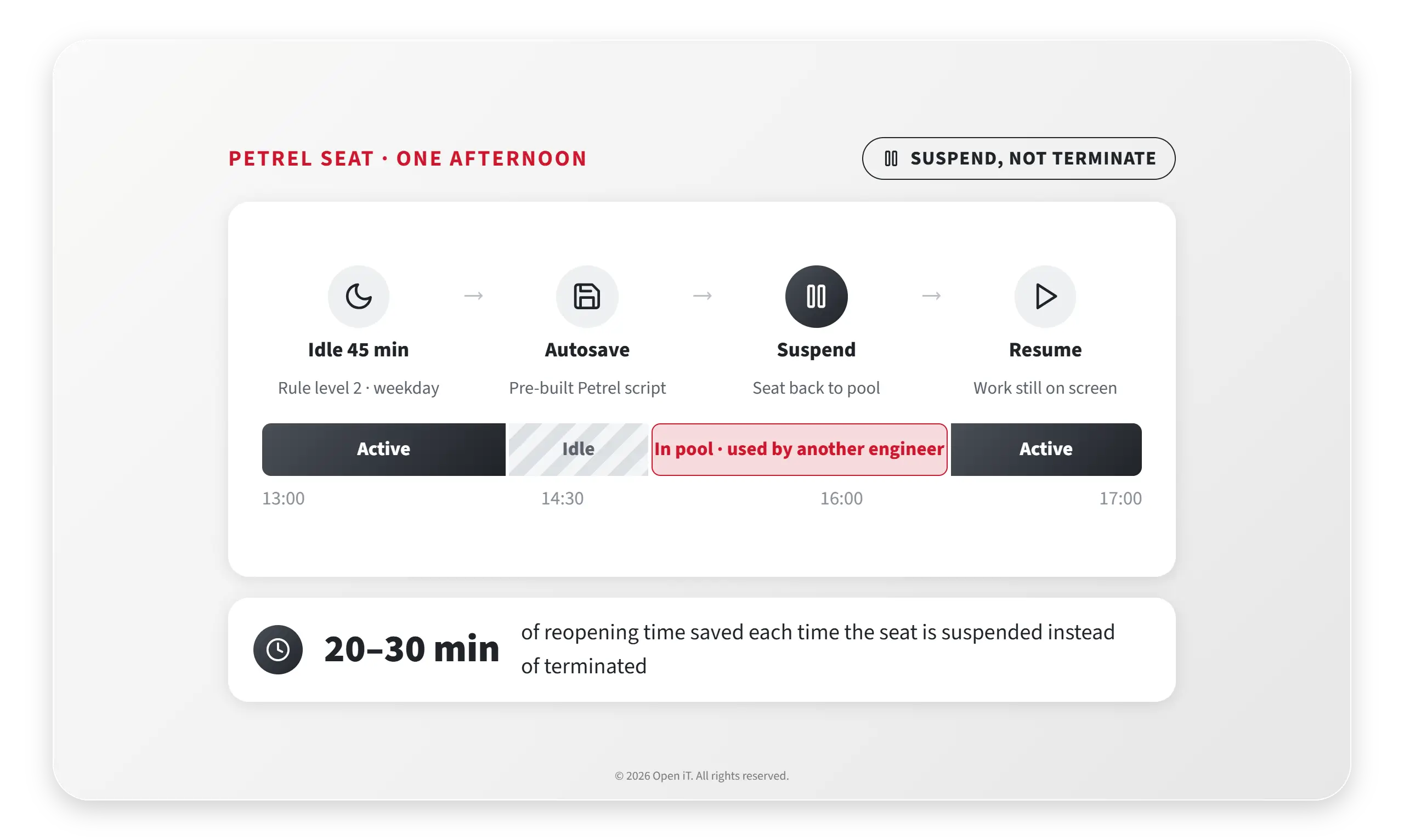
Open iT harvests an idle license in four ways across four rule priority levels, with time-of-day and day-of-week rules. The license goes back in the pool and the work stays on the screen, with a pre-built autosave script shipped for Petrel. Reopening Petrel costs an engineer 20-30 minutes, which is why suspend beats terminate.
4
Renew the estate on measured use.
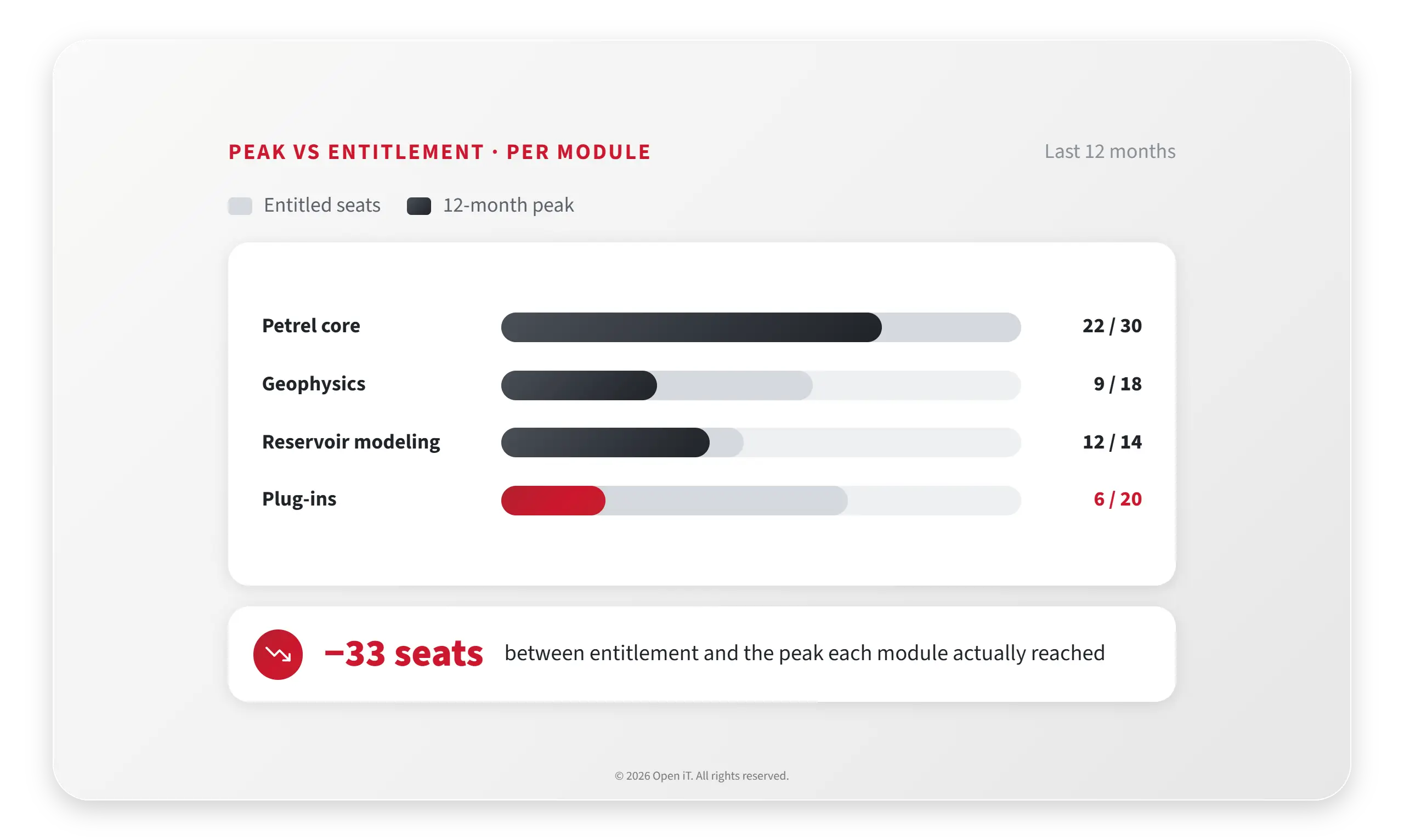
Twelve months of concurrency per application and per module, metered on your own infrastructure rather than read off the vendor’s report, turns a renewal from a seat-count argument into an evidence one. Bring the peak against entitlement per module rather than a total seat count, and the discussion starts from what the estate consumed.
Have questions? Talk to a licensing specialist.
Petrel Idle-Seat Calculator
Four numbers you already know give you an estimate of what your idle Petrel capacity is worth. No email needed to see the result.
Your effective rate in USD. Open iT publishes no per-seat Petrel price, so cost figures stay empty until you enter yours.
Open iT measures 20 to 40 percent across engineering estates. Use 30 if you have never measured yours.
idle capacity in your pool, a ceiling and not a forecast
- 0 active
- 0 idle
- Annual spend sitting idle
- –
- Published benchmark (20–21%)
- 0 seats
- Published benchmark value
- –
- Concurrency ceiling
- 0 seats
How this is calculated
Every line is arithmetic on your inputs and two published customer outcomes. Nothing here is modelled, weighted, or inferred.
- Annual spend = seats × cost per seat.
- Idle capacity = seats × idle share. The 20 to 40 percent default range is what Open iT measures across engineering estates.
- Published benchmark = annual spend × 20% and × 20.8%. Devon Energy cut its subsurface software budget 20% across 11 vendors and modules (openit.com, 2022). A published, anonymised energy supermajor reduced subsurface modeling from $12M to $9.5M, which is 20.8%. Both are reported as harvesting and optimisation outcomes.
- Concurrency ceiling = seats × (1 minus idle share). Real peak concurrency is higher than average demand and can only come from metering.
Idle capacity is the ceiling: every idle hour recovered, which no estate achieves. The benchmark is the floor two real deployments landed on, within a point of each other. Your outcome sits between them, and the only way to narrow it is to measure.
What this cannot tell you
- Your actual idle share. Until Level 2 measures host activity, the slider is an assumption, and it is the input the whole result swings on.
- Your real peak concurrency. Twelve months of metering gives you the peak against entitlement per module.
- Which seats are recoverable. Automatic reclamation runs on FlexLM, LM-X, LUM and RLM. Petrel on FlexNet qualifies; anything else in your estate needs checking first.
- Whether suspend suits your operations. Reopening Petrel costs an engineer 5 to 15 minutes, which is why suspend beats terminate, but thresholds still need setting with your leads.
Figures in USD. Two published customer outcomes are used as the benchmark band. They are that customer’s results, reported as harvesting and optimisation outcomes, and are not a projection for your estate.
Questions fréquemment posées
Can Open iT harvest only during certain hours?
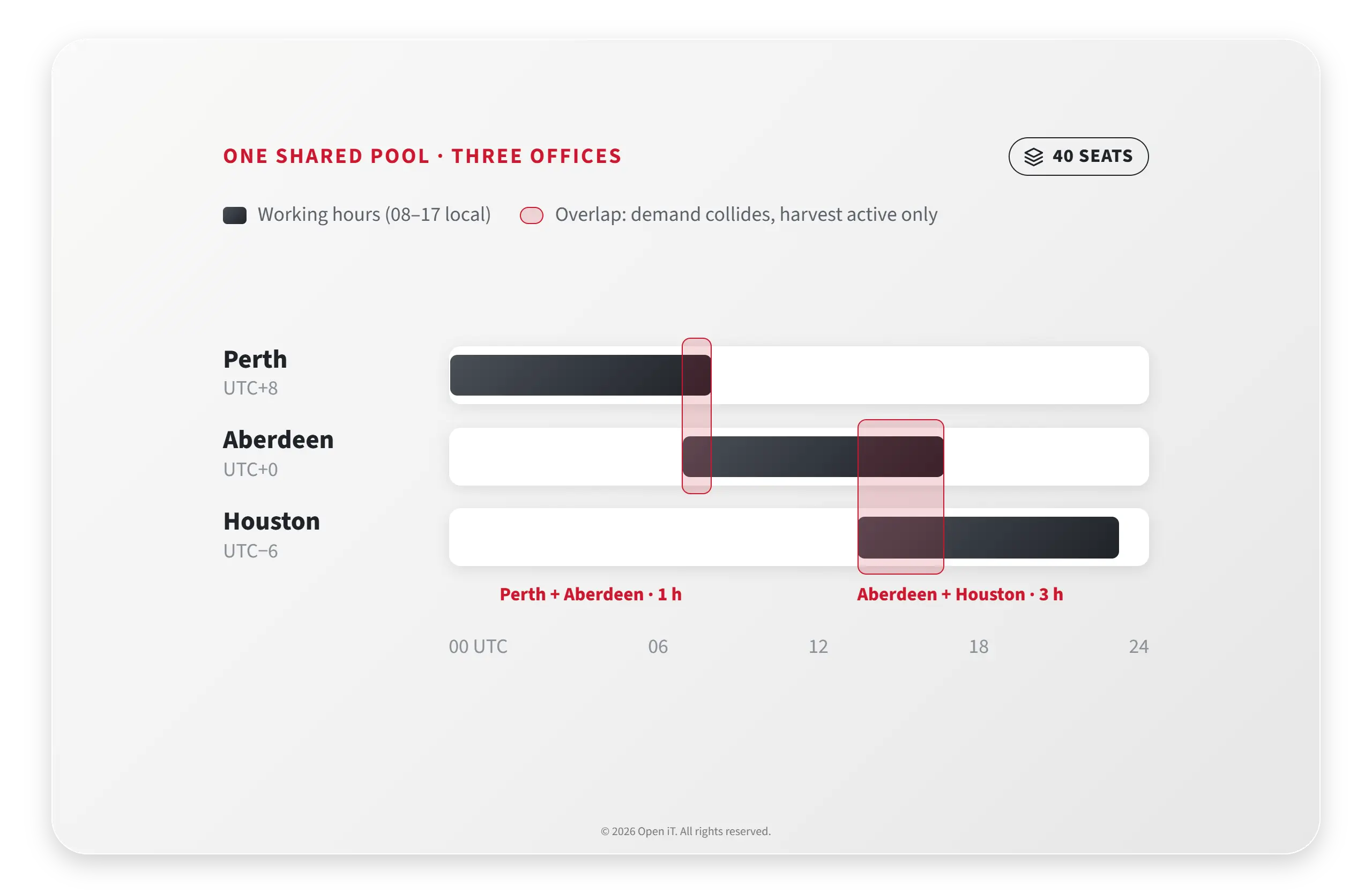
Yes. Recovery can be enabled for specific windows, such as the hours when your time zones overlap and demand collides.
Is OrcaFlex supported?
Yes. OrcaFlex from Orcina is on the confirmed supported list.
Can it track usage across partners and locations?
Yes. Usage is reported by site and project across a distributed team.
Does harvesting interrupt active work?
No. Only idle seats are recovered, and sessions resume where they stopped.
The vendor’s account manager knows exactly what you contracted. Nobody on your side knows what you used, because the answer sits in a dozen consoles that do not talk to each other. One record across your subsurface license managers closes that gap. It is how Devon Energy took 20 percent off a subsurface software budget after consolidating 11 vendors and modules onto one platform, and it is what turns your next Petrel renewal into a two-sided conversation.