Program Cost Allocation & Chargeback
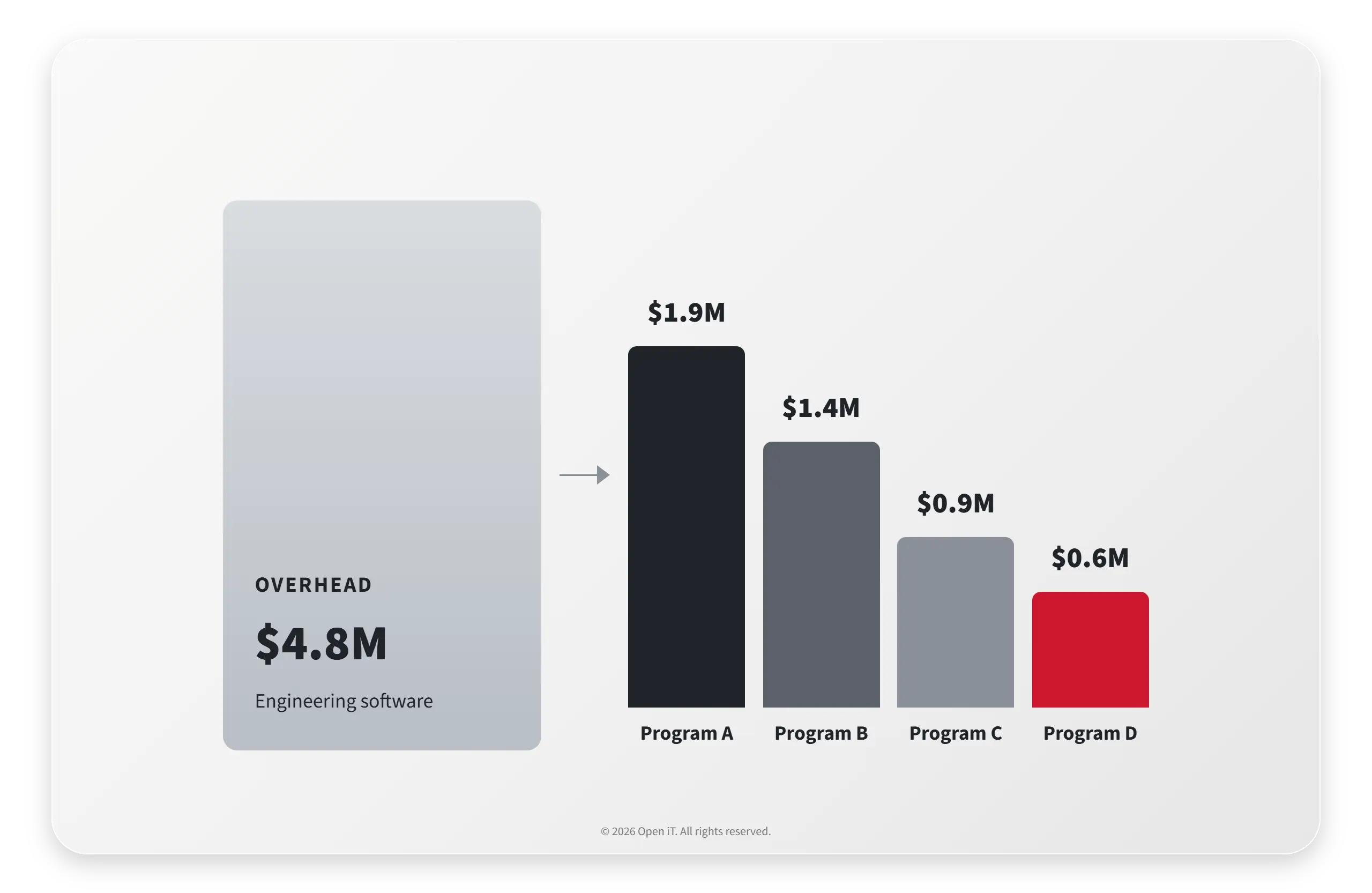
Engineering software sits in one overhead line. Your programs are costed separately.
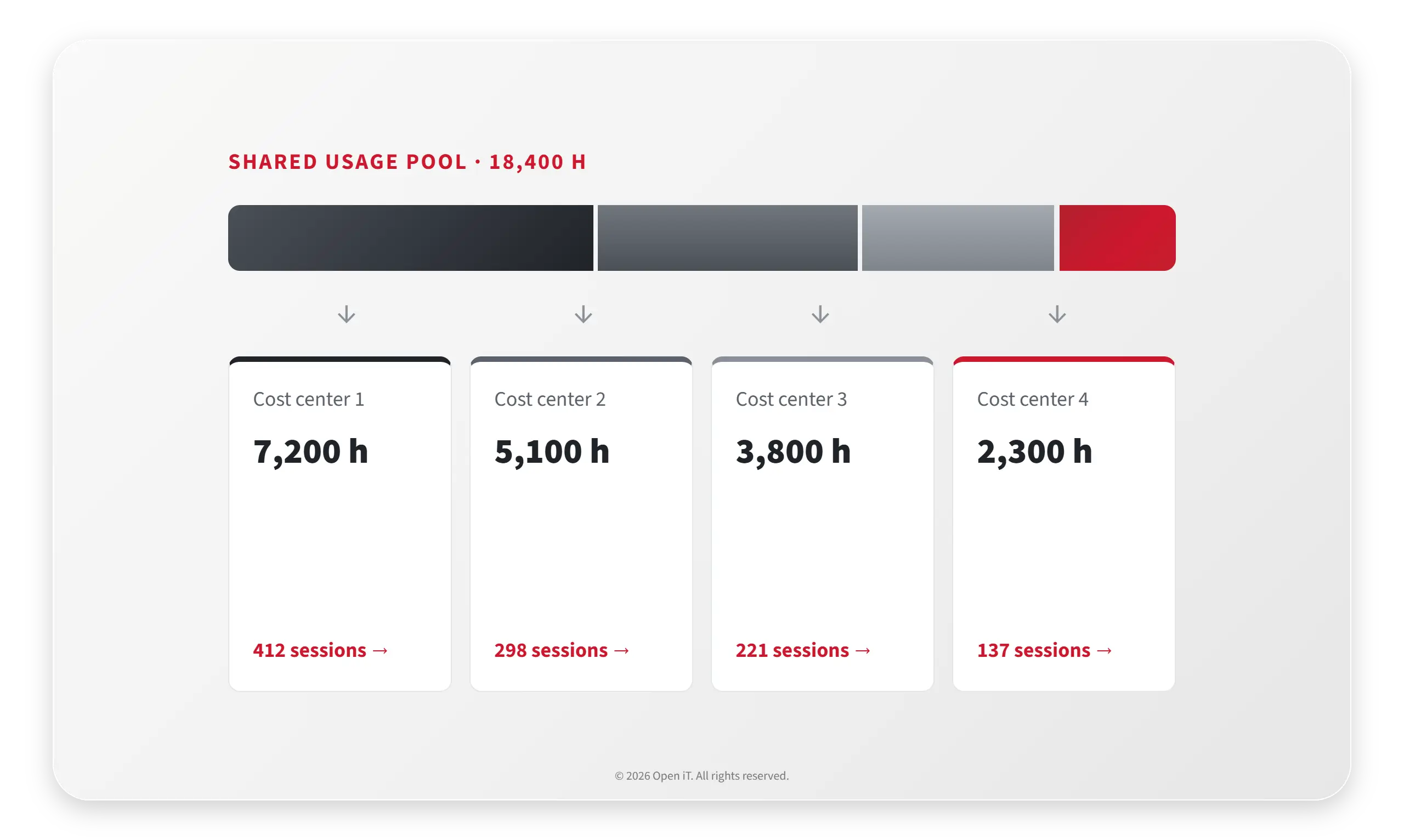
Open iT maps license usage to cost centers, programs and contracts, so engineering software cost lands on the work that consumed it, in a form a program manager or an auditor can follow.
- Usage grouped by department, project, location or business unit
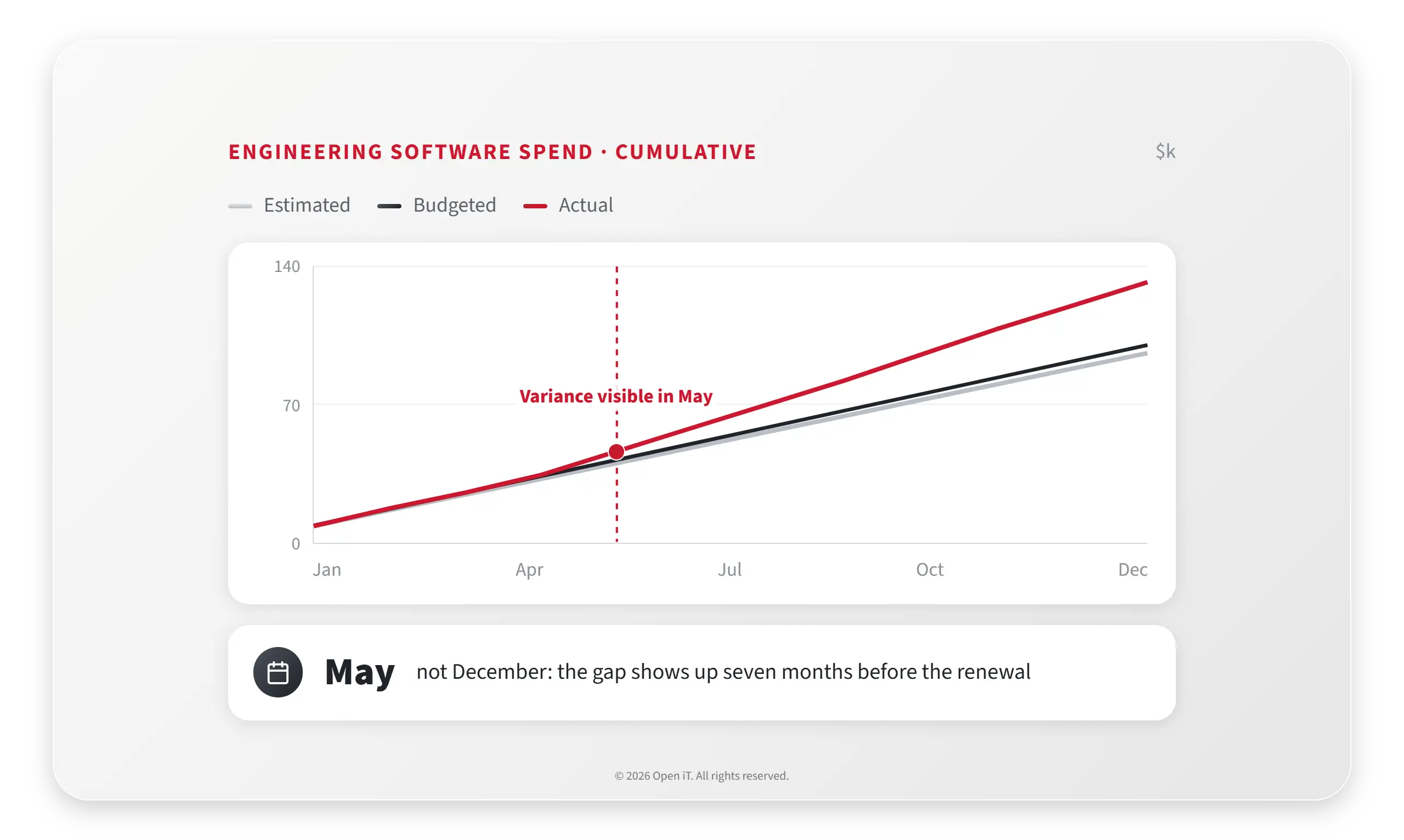
- Estimated, budgeted and actual spend in one view
- An eighteen-month usage projection behind the next two renewals
An overhead line nobody owns is an overhead line nobody defends.
Engineering software on a multi-program site is bought centrally, held centrally and reported as one number. Ask a program manager what their software costs and the honest answer is a share of a total that was never split. Between 20 and 40 percent of engineering licenses are idle at any given moment, and in a pool nobody owns, nobody owns that number either. When the renewal comes back higher, no one can say which program the growth came from, so the increase gets absorbed rather than argued.
Defense procurement asks for this directly now. Requirements specify informing a chargeback cost model that attributes software cost to departments, programs and projects. That’s a metering question before it’s a finance question, because you can’t allocate what nobody measured.
O que o Open iT faz
2
Allocate cost to whoever consumed it.
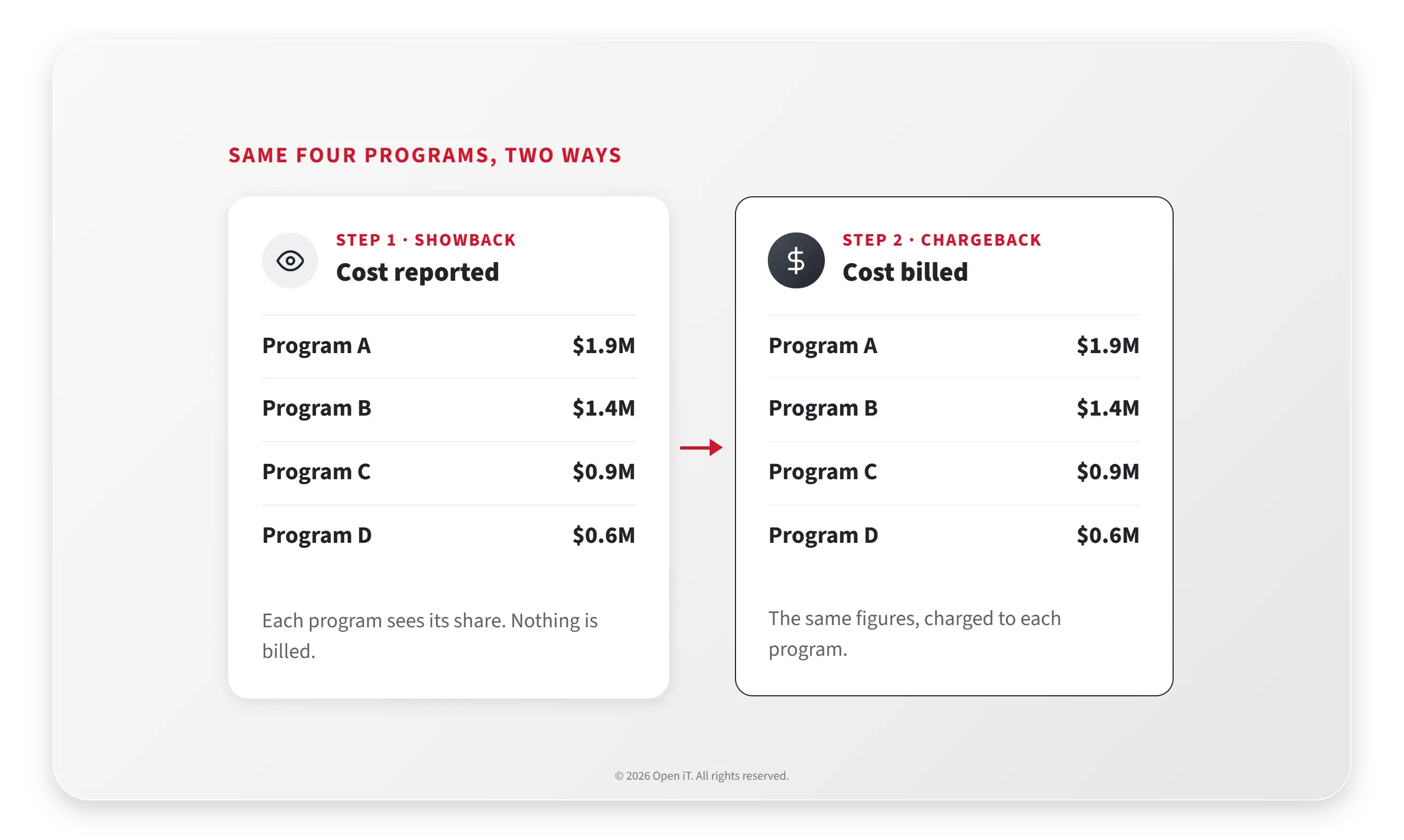
LicensePlanner™ supports chargeback, where the cost lands on the consuming program, and showback, where it’s reported without being billed. Showback first is the usual sequence, because it lets programs see the number and challenge it before anyone’s budget moves.
4
Test the decision before you commit to it.
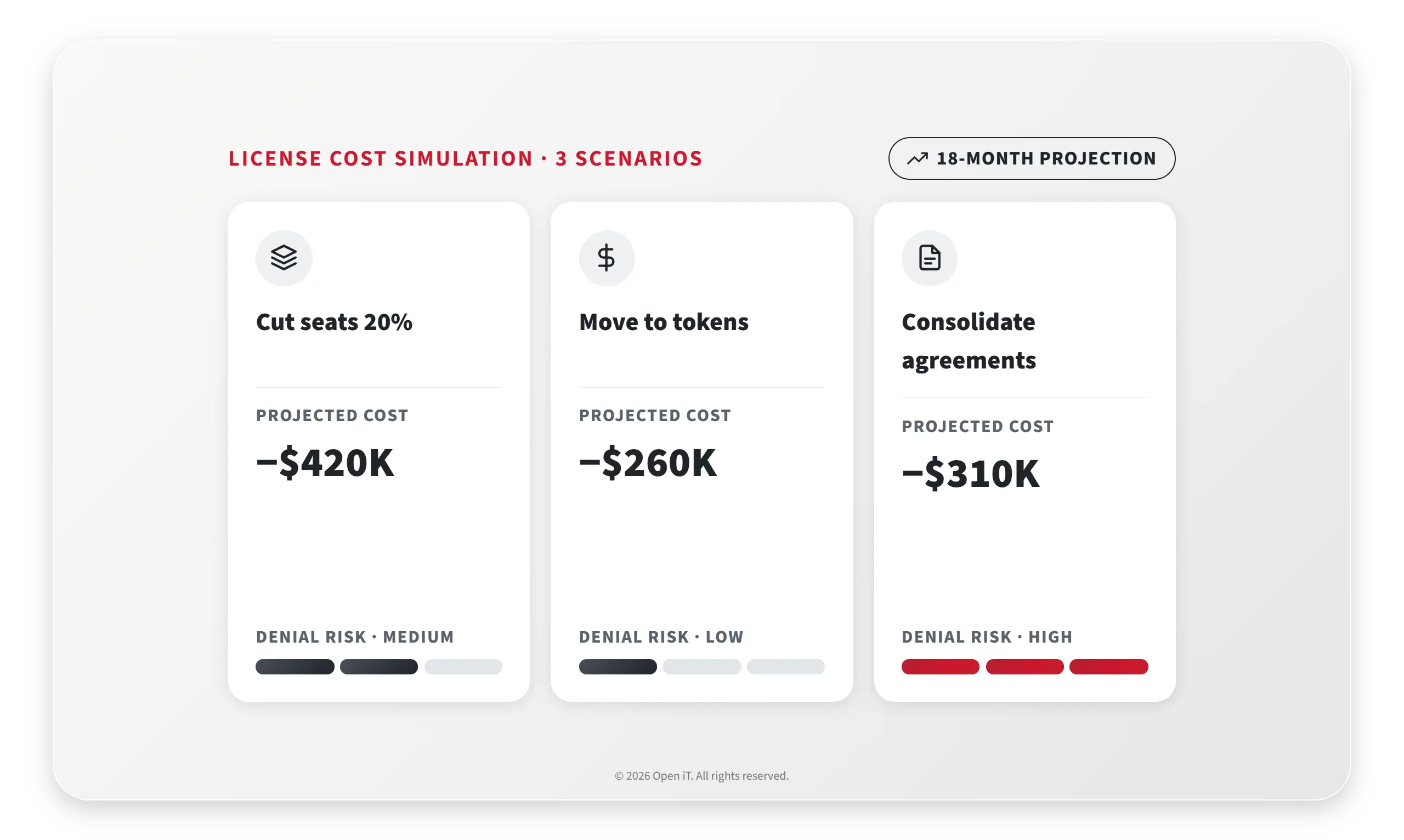
License Cost Simulation runs the scenario first: cut seats by twenty percent, move to a token model, consolidate two agreements after an acquisition. LicensePredictor™ projects usage eighteen months out, which covers the next renewal and the one after it.
Tem alguma dúvida? Fale com um especialista em licenciamento.
Program Chargeback Model
Estimate what each program, department or cost center actually owes for a shared engineering software pool, before you build the real thing in LicensePlanner. No email needed to see the result.
1. Define your license pools
Each row is one shared pool of engineering software. Pick the allocation model that matches how the vendor actually bills you: named user, pay-per-use, or concurrent.
2. Split usage across programs
List the programs, projects or cost centers sharing these pools, then enter each one’s usage in the pool’s own metric: average concurrent seats in use, distinct named users, or metered hours.
3. Estimated cost by program
Every program’s total cost, allocated in proportion to what it actually used from each pool.
owed by the largest program
- Total pool spend
- $0
- Programs sharing it
- 0
Como é que isto é calculado
IT chargeback bills each business unit for its share of a shared resource. For engineering software that pool is almost always priced one of three ways: named user (per distinct person), pay-per-use (per hour of active use), or concurrent (a fixed number of seats the whole site shares, which is the model most engineering software actually uses).
- A program’s cost from a pool = pool cost × the program’s usage ÷ total usage across all programs, in that pool’s own metric.
- A program’s total = the sum of its cost across every pool.
- Every dollar of pool cost is allocated to some program, so the allocated total always equals total pool spend. Variance only shows up once you compare this estimate to metered usage over the year. LicensePlanner reconciles that gap through a year-end Profit & Loss statement instead of letting IT absorb it silently.
- Utilization of a concurrent pool = total usage ÷ seats purchased. The bands are rules of thumb: over 100% means contention, 85% and above is near capacity, 40% to 85% is healthy, and under 40% is significant unused capacity.
This calculator mirrors the allocation logic described in Open iT’s own LicensePlanner documentation: named user, pay-per-use and concurrent models, mapped from cost generators to cost centers. LicensePlanner runs this continuously on metered usage data instead of numbers you type in once.
For planning discussion only. Figures are an estimate from the numbers you entered, not metered usage.
Perguntas mais frequentes
Can cost be allocated to a specific program or contract?
Yes. Cost Centers group usage by department, project, location or business unit, and chargeback puts the cost on whoever consumed it. The allocation traces back to the underlying usage records.
Do we need our entitlement data in Open iT for this to work?
No, and it shouldn’t live there. Open iT is a metering and optimization system, not an entitlement repository. Purchase orders, entitlement records and allocation workflows stay in your software asset management platform, joined to usage through the ServiceNow integration and SSAD normalization.

Will the numbers reconcile with what finance already reports?
LicensePlanner holds estimated, budgeted and actual against the vendor and contract records, and reporting runs through a native Power BI connector, direct Excel connections or Tableau, so the allocation lands inside the reporting your finance team already uses.
Isto é monitorização dos funcionários?
No. Data Anonymization transforms user, host and application names while keeping the usage data reliable, so cost can be allocated at program level without identifying anyone.
Cost with no owner is cost with no defender. Put usage against the program that consumed it, and the renewal stops being an increase you absorb and starts being one you can explain, or refuse.