


- Produtos
- Soluções
-
-
EVENTOS E WEBINARS

-
- Recursos
- Empresa
- Contacte-nos
EVENTOS E WEBINARS



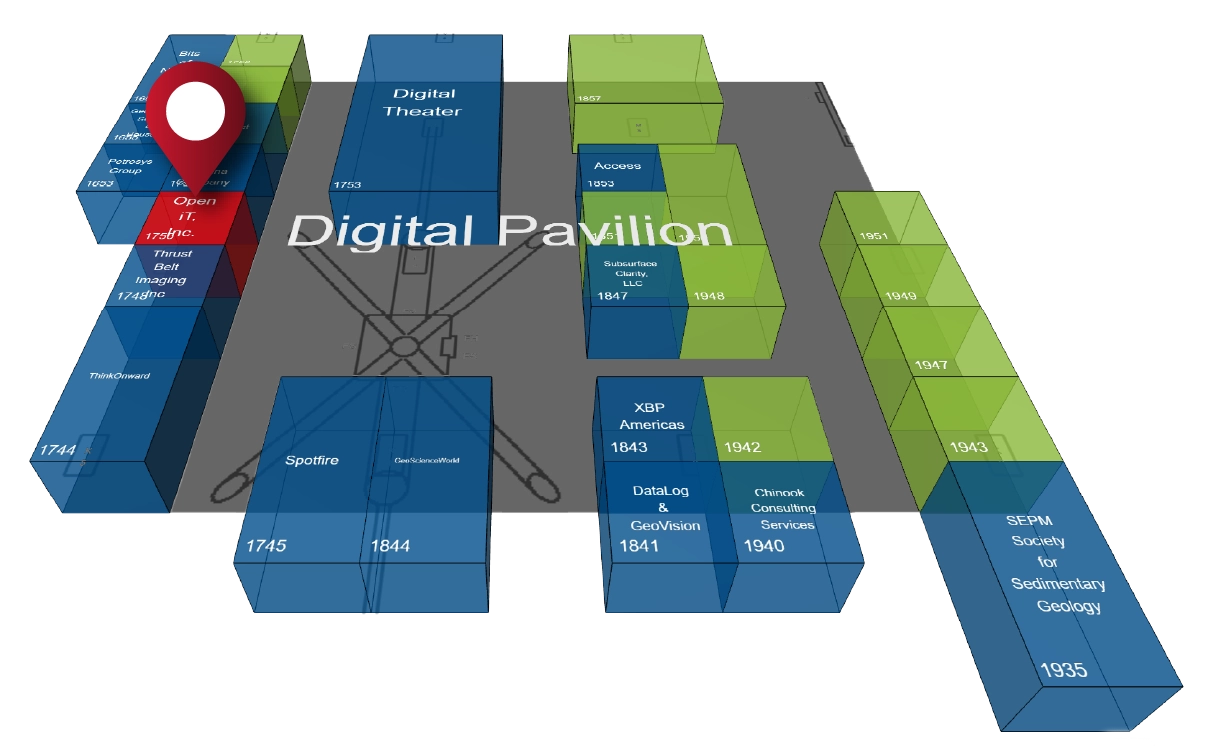
Here’s an idea: do more with less license spend. Join Open iT at Booth #1750 and discover how your Petrel, OpenWorks, or SEIS3D licenses are actually being used, not just who has access to them.
30 minutes with us could change how your next year’s operations and software budget looks.
August 17-20, 2026
Centro de Convenções George R. Brown
Houston, Texas

VISIT US
Stop by for a live look at how Open iT tracks True Active Usage across Petrel, OpenWorks, and 90+ other license managers. We’ll run a short demos, and booking ahead means you skip the line.
SESSÃO DE INTERVENÇÕES
This session explores how simulation usage data helps organizations make better engineering decisions, improve resource allocation, and maximize simulation ROI in constrained environments.
Session: Session 5 | Systems Modeling and Simulation
Presenter: Heinrich Bartels — Strategic Advisor – Cost Engineering & Program Optimization
Friday, May 29, 2026
10:00 AM
Room 102
Saint Charles, Missouri, USA
As engineering simulation becomes increasingly central to product development, organizations are facing growing pressure to scale computational workloads across shared on-premise and cloud-based environments. While advances in solver capability and compute infrastructure have expanded simulation capacity, resource availability is now frequently constrained by licensing and entitlement models that are tightly coupled to runtime behavior. In complex simulation workflows, unmanaged resource consumption can introduce variability in execution time, reduce throughput, and compromise the predictability of engineering schedules. This presentation introduces a data-driven governance approach for managing simulation resource consumption as an integral part of the simulation process rather than an external administrative function. The framework treats licensing constraints as a system-level parameter, similar to compute availability or memory limits, and integrates consumption awareness directly into simulation workflow planning and execution. By correlating workload characteristics—such as concurrency, wall time, solver class, and execution context—with observed consumption patterns, the approach enables engineers and simulation managers to anticipate constraints before they impact critical project milestones. The methodology is based on the collection and normalization of granular telemetry from execution environments and resource management layers. These data streams are aggregated into consumption profiles that describe how different classes of simulation workloads behave under varying operational conditions. Predictive models derived from historical execution data are then used to support proactive decision-making, including workload prioritization, queue management, and adaptive scheduling. Importantly, this governance layer operates independently of specific solvers or licensing technologies, ensuring portability across different simulation domains. From a systems perspective, the presentation outlines an architecture that integrates data collection, analytics, and policy enforcement with existing simulation process infrastructure. Lightweight policy mechanisms are used to translate predictive insights into runtime controls, allowing organizations to balance competing objectives such as throughput, fairness, and schedule adherence. Particular emphasis is placed on maintaining engineer autonomy while introducing guardrails that prevent resource contention during peak demand periods. Applied implementations of this framework demonstrate improved stability in simulation execution and reduced variability in job turnaround times. Rather than optimizing for cost alone, the analysis focuses on operational performance indicators that are directly relevant to engineering outcomes, including queue stability, utilization consistency, and predictability of simulation delivery. These improvements support more reliable design iteration cycles and reduce the risk of downstream delays in product development. The session concludes by presenting a set of practical metrics and governance principles that can be adopted by organizations seeking to scale simulation workloads in a controlled and transparent manner. Attendees will gain insight into how data-driven governance can be embedded within simulation processes to support resilient, scalable, and well-coordinated engineering operations, particularly in environments where shared resources and complex workflows are the norm.
Have a question before the show, or want to skip the line once you’re there? Reach out to any of our team members below, or stop by Booth #1750 anytime August 17–20.

Open iT tracks True Active Usage across 90+ license managers, showing exactly who is using engineering software like Petrel and OpenWorks, and how often. For O&G and geoscience teams managing seven-figure software budgets, this means fewer license denials, less idle spend, and renewal decisions based on real usage data instead of guesswork.
For security purposes, please solve this simple puzzle to verify you are human before sending an OTP.