


The architecture, engineering, and construction (AEC) industry is experiencing rapid digital transformation, and software asset management (SAM) is emerging as a critical practice to maximize the value of technology investments. Firms are not just increasing technology spending—they are deploying transformative digital tools, including BIM, CAD platforms, AI-driven design systems, and advanced simulation software, to improve efficiency, manage labor shortages, and remain competitive amid rising material and operational costs.
With most organizations planning to expand technology budgets in the coming year, implementing effective SAM ensures that every license contributes to productivity, cost efficiency, and project success. Platforms such as Open iT provides analytics and visibility that help organizations understand software usage patterns and optimize investments.
Software Asset Management: More Critical Than Ever
According to the Bluebeam AEC Technology Outlook 2026 report, 84% of firms plan to increase technology spending, yet only 11% consider themselves fully digital. Many AEC organizations operate in hybrid environments, combining paper workflows, legacy systems, and cloud-based applications.
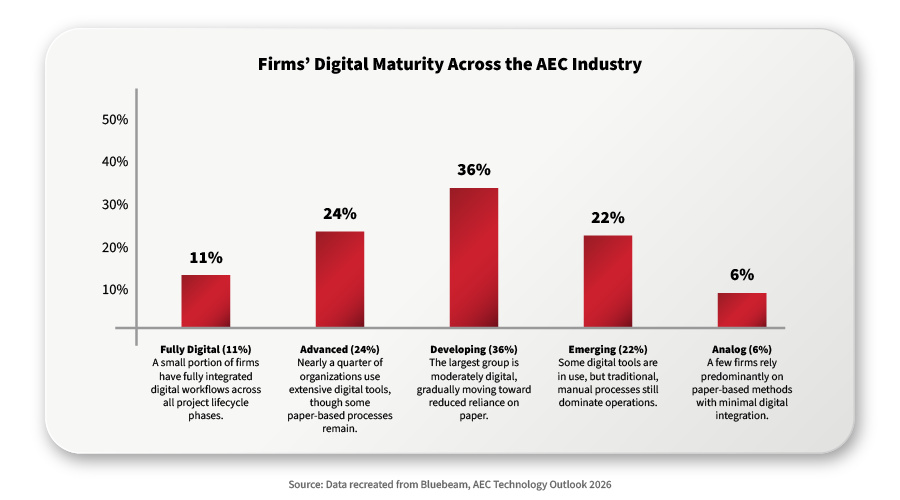
Deloitte’s 2026 industry outlook reinforces this, highlighting that AEC firms are embracing digital transformation—including AI, digital twins, connected jobsite tools, and real-time analytics—to optimize capacity, control costs, and improve competitiveness. However, poor data quality and governance can undermine these initiatives, reducing return on technology investments.
This uneven adoption creates challenges in tracking software usage, managing licenses, and ensuring compliance—precisely the areas where software asset management and platforms like Open iT deliver measurable value. Integration issues across project management, IT, and procurement systems further complicate visibility, while skills gaps and limited training budgets make structured governance difficult to implement. Open iT analytics provide detailed insights into license usage trends, enabling organizations to make data-driven decisions that maximize ROI on growing technology investments.
DEMO: See where your AEC software spend leaks.
Four Key Benefits of Software Asset Management in AEC
1. Improved Visibility and Control
SAM consolidates information about installed software, active subscriptions, and license entitlements. Platforms like Open iT allow firms to monitor idle licenses, analyze feature usage, and reallocate resources efficiently. This ensures that critical projects always have access to the tools they need while reducing wasted expenditure.
2. Cost Optimization
Software costs account for a significant portion of AEC technology budgets. SAM enables detailed tracking of peak versus sustained usage, concurrent license consumption, and module-level adoption. Insights from Open iT analytics help reduce overprovisioning, eliminate redundant subscriptions, and align investments with actual usage patterns, a necessity in a market where margins are compressed and budgets are increasingly tied to strategic digital initiatives.
3. Compliance and Risk Mitigation
Many AEC software agreements include complex licensing rules, such named-user, module restrictions, or cloud-based usage limits. SAM ensures that license usage aligns with contractual terms, while Open iT reporting can flag potential compliance issues before they become costly problems.
4. Supporting Digital Transformation
As firms adopt AI-driven design, cloud collaboration, and simulation tools, software asset management provides the structure necessary to manage complexity. Open iT enables organizations to link software licenses to operational workflows, ensuring that technology adoption translates into measurable productivity and efficiency gains. Deloitte highlights that without proper data governance, digital transformation initiatives risk underperforming—a gap SAM can fill by providing accurate usage and entitlement data.
Emerging AEC Technology Trends and Software Asset Management Implications
1. Cloud and SaaS Adoption
Cloud-based tools and SaaS platforms provide flexibility and scalability but introduce subscription-based billing models that require continuous monitoring. SAM platforms, including Open iT, help track consumption, forecast license requirements, and optimize renewals, ensuring firms pay only for what is used and avoid overprovisioning.
WEBINAR: Cloud and SaaS licensing models introduce ongoing cost and governance challenges. Watch the on-demand webinar “Preparing for Cloud-Based and SaaS Licensing Models” to learn how AEC firms manage subscription usage, forecast demand, and avoid overprovisioning. Here’s your invitation to watch the recording.

Open iT | Webinar On-Demand
Preparing for Cloud Based and SaaS Licensing Models
2. AI and Advanced Simulation Software
Generative design, predictive modeling, and simulation software are increasingly central to AEC workflows. Licensing for these tools may involve concurrency, compute hours, or module-based entitlements. Deloitte predicts that applied analytics and AI systems will accelerate adoption of advanced tools to optimize schedules and project outcomes. Without granular software asset management, high-demand licenses can become bottlenecks. Open iT analytics provide feature-level and concurrency insights, supporting efficient allocation and uninterrupted project execution.
3. Integration and Interoperability Challenges
Disconnected systems make it difficult to consolidate license usage data. Integrating SAM with IT, procurement, and project management platforms, as Open iT does, enables unified dashboards and reporting, providing actionable insights into software consumption and investment efficiency.
4. Skills Gaps and Training Deficits
Limited training budgets and evolving software landscapes can result in underutilized tools. Deloitte forecasts a persistent talent gap, with thousands of new workers needed annually, prompting firms to accelerate adoption of digital tools to supplement workforce constraints. SAM platforms capture usage patterns, highlight adoption gaps, and guide targeted training programs. Open iT reporting identifies which software modules are most frequently used or underutilized, helping organizations focus resources effectively.
Top Five Software Asset Management Strategies for Maximizing AEC Investments
1. Track Usage at a Granular Level
Monitor feature-level usage, idle licenses, and peak vs. sustained activity. Detailed insights allow for reallocation of licenses to high-priority projects, improving resource utilization and ensuring investments support operational goals.
2. Manage the Software Lifecycle
Implement structured processes for procurement, renewal, and retirement of licenses. Automated alerts from Open iT help manage renewals, schedule compliance audits, and maintain accurate entitlement records.
3. Integrate SAM with IT and Financial Systems
Connecting software asset management with ERP, project management, and IT asset management systems provides accurate reporting and aligns technology spend with organizational priorities.
4. Establish Governance Frameworks
Clear policies for software usage, acquisition, and retirement, combined with defined roles and approval processes, ensure consistent application of SAM practices and strengthen compliance. Deloitte notes that poor data governance reduces ROI on technology investments, highlighting the importance of structured oversight.
5. Leverage Insights for Continuous Improvement
Use analytics from SAM platforms like Open iT to identify training needs, optimize workflows, and ensure users are fully utilizing available software features.
The Impact of Software Asset Management on AEC ROI
Strategic software asset management produces measurable benefits for AEC organizations:
- Optimized Software Spend: Improved visibility enables license reallocation and removal of unused subscriptions, reducing software costs by 30% or more in mature SAM programs.
- Enhanced Project Efficiency: Ensures that critical licenses are available for high-demand workflows, minimizing project delays.
- Reduced Compliance Risk: Proactively monitors usage to prevent audit issues.
- Improved Digital Transformation Outcomes: Aligning software assets with operational processes ensures that technology adoption delivers measurable value.
By applying SAM principles and leveraging platforms like Open iT, organizations can transform software from a cost center into a strategic asset, enabling innovation, efficiency, and competitiveness.
Laying a Solid Foundation for Your Software Investments
The AEC technology outlook for 2026 emphasizes accelerated adoption of digital tools, AI-driven workflows, and cloud-based platforms. While these innovations offer significant opportunities for productivity and collaboration, they also introduce complexity in software usage, licensing, and compliance. Software asset management is the cornerstone for maximizing software investments, ensuring licenses are efficiently utilized, costs are controlled, and compliance risks are minimized.
Integrating SAM practices into governance and operational workflows, and leveraging analytics platforms like Open iT, allows AEC firms to unlock the full potential of their software assets. By aligning technology adoption with project requirements and organizational workflows—and by addressing data quality, digital adoption, and workforce constraints—firms can achieve measurable gains in efficiency, productivity, and competitiveness in a rapidly evolving industry.
Connect with Open iT to gain actionable insights, optimize license usage, and maximize the value of your AEC technology portfolio.
Book a software asset management demo.