


- Perpetual vs. subscription only decides what you pay for — not what you need to measure. Cadence and Synopsys licensing terms settle ownership, but your metering still has to separate permanent demand from a one-time tape-out peak.
- A license checkout isn’t proof of use. FlexNet records that a feature was checked out, not whether anyone was actually working — so real usage requires activity data (CPU, keyboard/mouse), not just server logs.
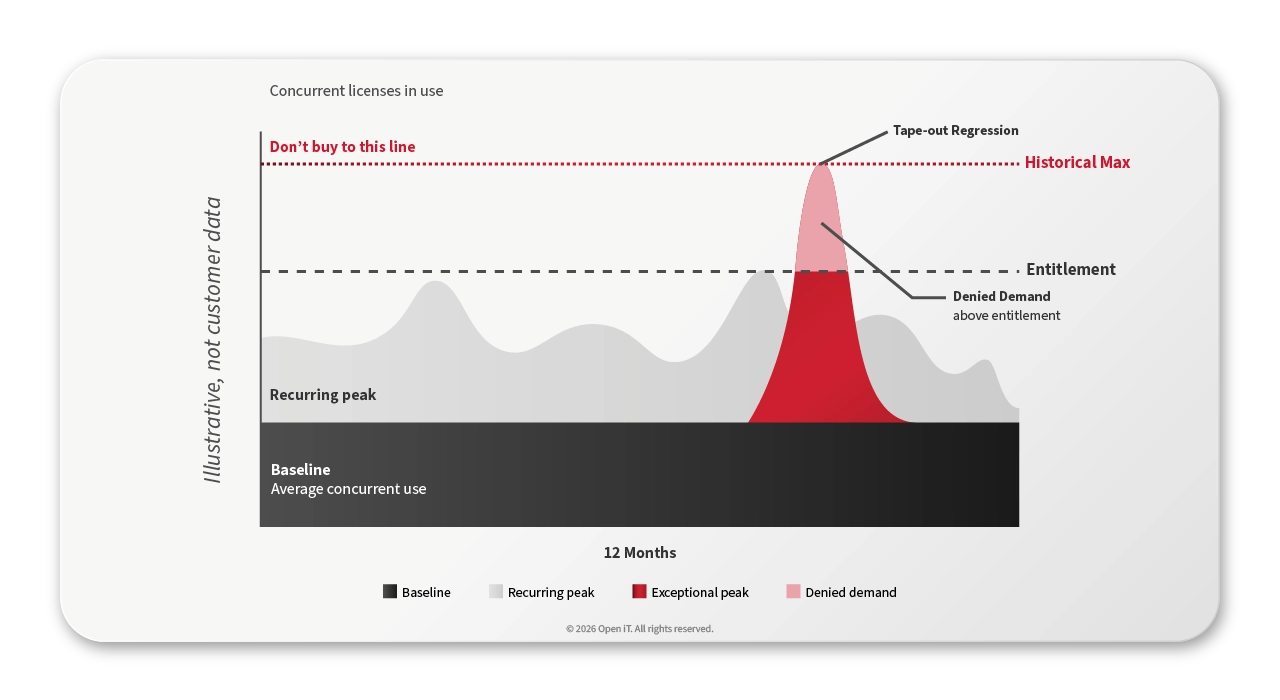
- Buy the baseline, not the peak. Sizing licenses off the historical maximum bakes a one-time regression spike into next term’s committed quantity — meter average use, recurring peaks, exceptional peaks, and denials separately instead.
Your Cadence license cost and your Synopsys license cost come down to what you commit to. Synopsys says its license fees depend on the type of license, the product mix and the number of copies. Perpetual versus subscription settles only the first. After that, your metering has a harder job: proving which demand is permanent and which is a tape-out peak.
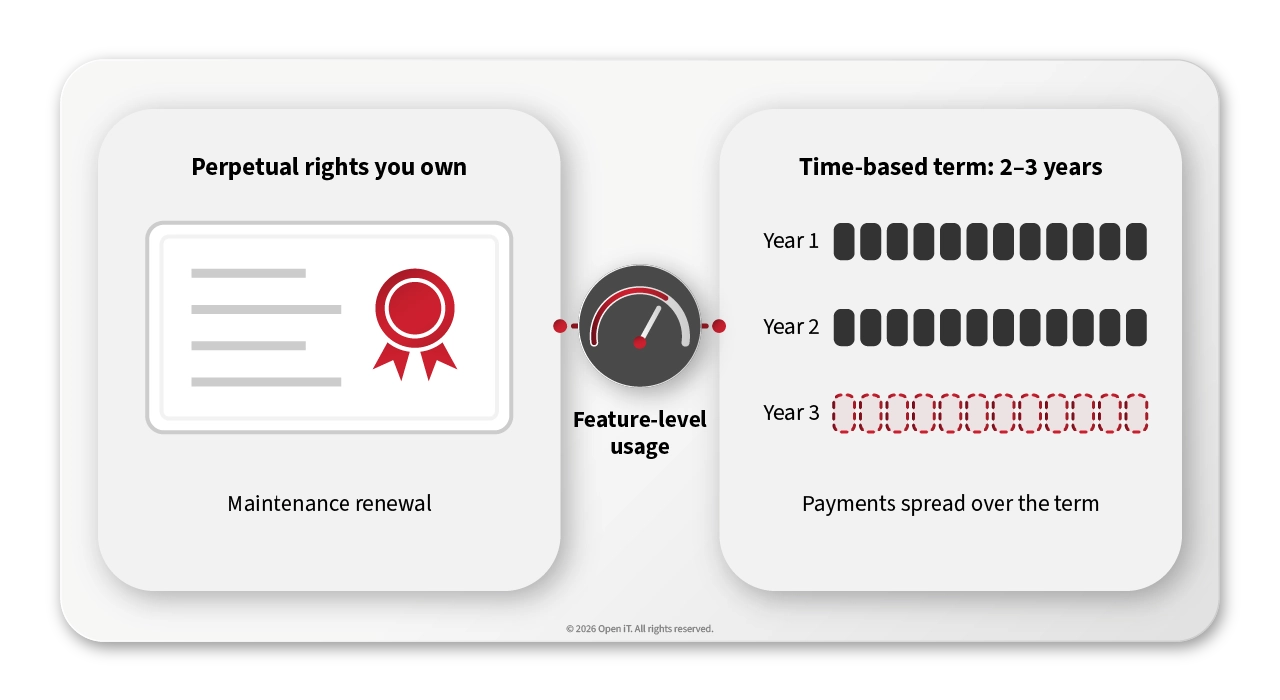
The choice is narrower than it looks
Cadence says it primarily licenses its software through time-based licenses, generally for two to three years. Payments are generally spread over the license period, with no right to return, so a Cadence quote is effectively a multi-year commitment. Only a small portion is perpetual. Those perpetual licenses don’t include the right to use new technology.
Synopsys says most of its arrangements are Technology Subscription Licenses with a finite term, and most of its EDA licenses are network licenses. A number of users share them on a defined network, sometimes regional or global. Its agreements restrict use to specified purposes within specified geographical areas.
So a clean either-or is rare at Cadence, and at both vendors the terms of use decide how far capacity can be shared. The real question is this: which perpetual rights you already hold are worth keeping on maintenance, and how much time-based capacity goes around them?
What each model asks your metering to prove
| Perpetual rights you already own | Time-based agreement | |
|---|---|---|
| What you pay for | Support and updates on the seats you keep | Access to a product mix for a fixed term, usually two to three years at Cadence |
| What metering must answer | Are these seats used enough to justify support? | Is the quantity and mix right for the whole term? |
| When the data matters | Before each maintenance renewal | Before signature, and whenever the agreement lets you remix |
| Cost of a wrong call | Support paid for shelfware, or updates lost when support lapses | Years of capacity sized on one peak |
Split the baseline from the burst
Start with two numbers you already own: the entitlement count per feature, and the peak concurrent checkouts for that feature. The gap between them is where the money sits. In engineering estates, Open iT typically sees 20–40% of licenses idle at any given moment.
A single peak hides two kinds of demand. Baseline demand is what teams use in every project phase: core schematic and layout, standard simulation, day-to-day verification. Burst demand arrives with regressions, signoff and tape-outs. Then it leaves.
Here is how a burst becomes baseline. The week before a tape-out, a regression campaign holds every simulation seat overnight. The usage report shows the feature maxed out, with denials. Nobody marks it as a burst. It becomes the case for next term’s quantity.
Buy the baseline with the lowest-risk long-term entitlement you can get. Cover the recurring swing with term or remixable capacity. Treat the exceptional peak as exceptional.
Meter four levels for every feature:
- Average concurrent use
- Recurring peak
- Exceptional peak
- Denied demand
Don’t set quantity at the historical maximum. One runaway regression can set that number alone.
A checkout isn’t proof of use
Synopsys Common Licensing runs on FlexNet: lmgrd plus the snpslmd vendor daemon. A Cadence license server runs FlexNet with the cdslmd daemon. Whether you run a Synopsys license server or a Cadence license manager, both record that a feature was checked out. Neither records whether anyone was working.
The error cuts both ways. Idle sessions left open inflate demand, and you overbuy. Unattended simulations run without keyboard or mouse input. An idle-screen rule calls them idle, and you underbuy. You need activity data, like CPU or GPU usage, from the machine, not just the server log.
Size features, not applications
License servers log EDA usage feature by feature. A Cadence server logs a feature name such as Concept_HDL_studio, not an application. If one design flow draws several features, a count of “Virtuoso licenses” hides the one that runs out. You own plenty of seats. Engineers still hit denials.
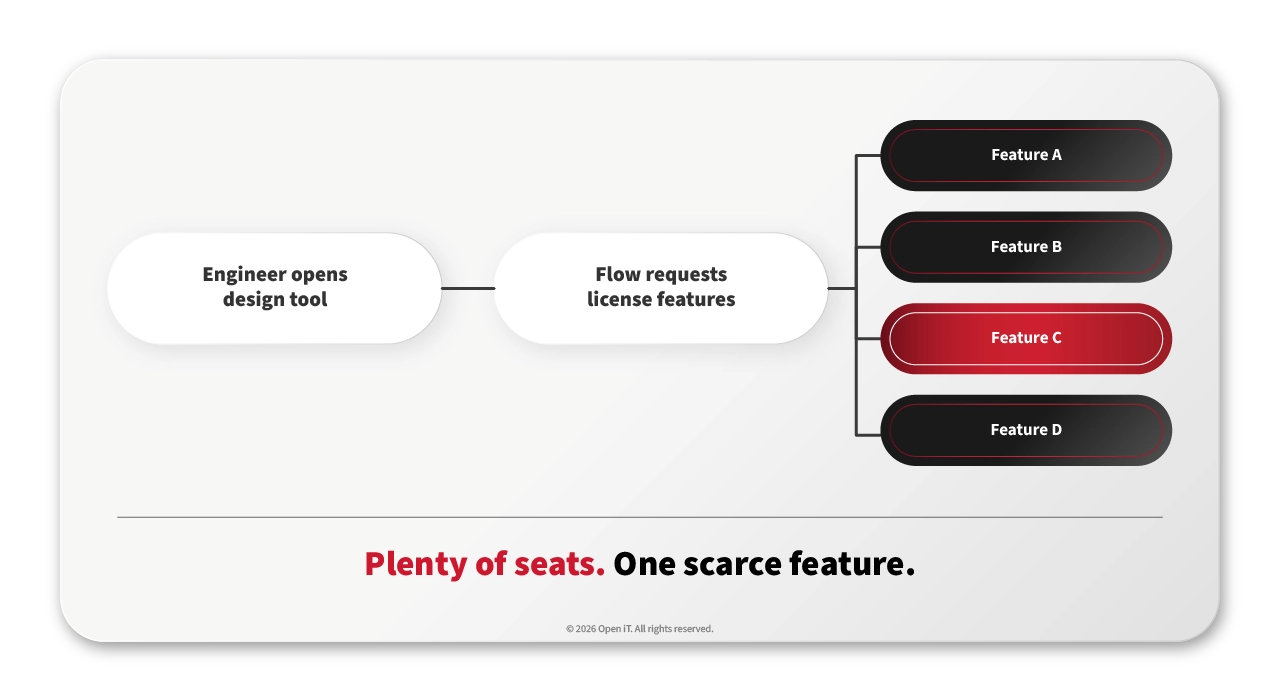
Ask what a Cadence Virtuoso license costs, or a Synopsys VCS license, and the honest answer depends on the features behind it. The same goes for Xcelium, Innovus and Allegro. Certain Cadence time-based agreements also let you remix among the products delivered at the start. Remix rights pay off only when you know which features are interchangeable.
Before you sign, ask for this evidence:
- Entitlement inventory with expiry and maintenance dates
- Hourly concurrent use per feature, per site
- Denials and queue times
- Active-use indicators, not just checkouts
- User, team, region and project attribution
- The project and tape-out calendar
- Remix and geographic rights in the contract
Where Open iT fits
Cadence and Synopsys use FlexNet Publisher for their principal network-licensed EDA portfolios—through cdslmd and snpslmd, respectively—although product-level exceptions can apply. Its autoconfigurator detects the FlexNet setup and configures data collection itself. Here’s what SAM and procurement see once it runs.
Peaks show up when they happen. Open iT can sample FlexNet status at five-minute intervals and combine it with Flex log collection to capture short checkouts that occur between samples. The reports are broken down by host, user and user group, so a tape-out spike appears with the team behind it named. Denials are counted too. Max and Average License Use with Denials report helps decision-makers “determine the right number of licenses by analyzing the frequency of maxed-out licenses and denials.”
You can check what you own against what the server hands out. An optional discrepancy check compares the license count in the license file with what the license server reports. Run it before a renewal.
Reserved seats stop hiding. FlexNet lets you reserve seats for named users or machines in an options file. Open iT reads that file and shows, per feature, how much of the reserve sits unused, live and as a trend. Those reservations reduce capacity available to the rest of the organization, whether or not the reserved users consume it.
Level 2 True Active Usage adds the machine’s view: CPU, I/O, keyboard and mouse activity on Windows, Unix and macOS. A working seat reads differently from an idle one.
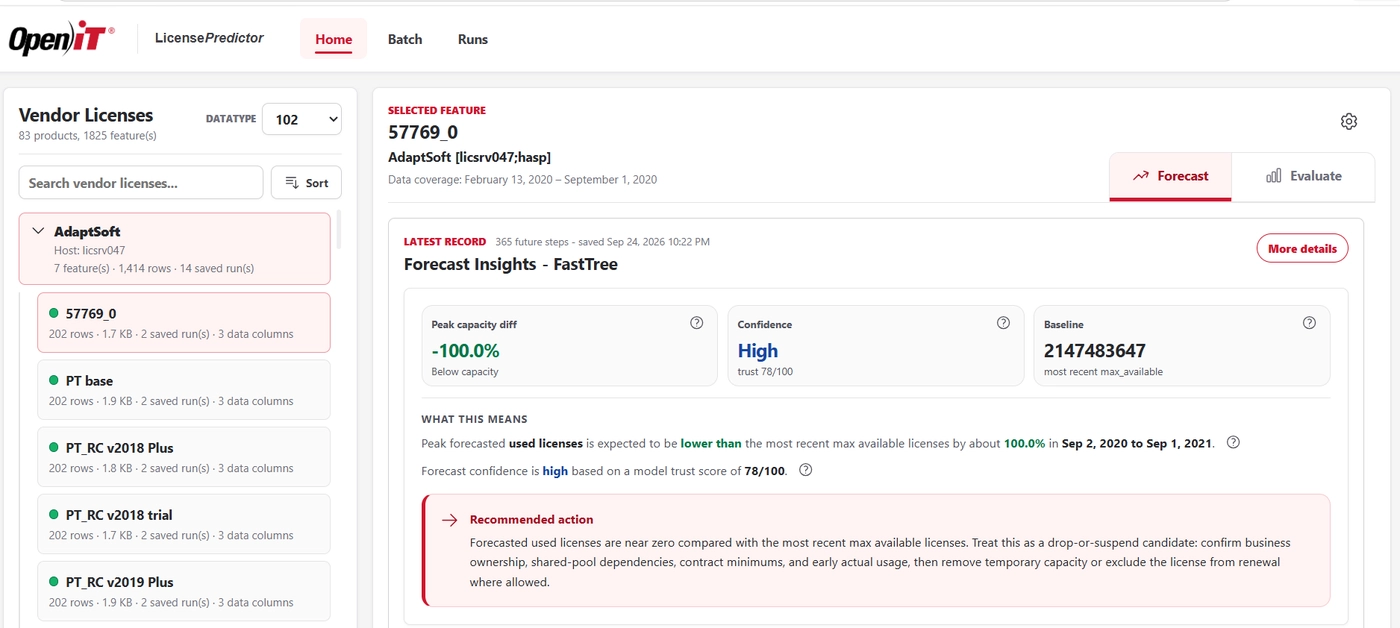
LicensePredictor™, a plug-in to LicenseAnalyzer, projects license usage months ahead. Before you see a number, Evaluate mode tests the forecast against held-back usage history and gives it a trust score out of 100. You bring procurement a forecast that has already been checked against real usage.
For the metering basics, see How to Effectively Meter Cadence Design Software. For the wider shift in licensing models, see Evolution of Subscription-Based and PPU Licensing Models.
Frequently Asked Questions
Can we still buy perpetual Cadence or Synopsys licenses?
Cadence says a small portion of its software is licensed perpetually and that it primarily uses time-based licenses of generally two to three years. Synopsys says most of its arrangements are finite-term Technology Subscription Licenses, while its simulation and analysis software is offered both by subscription and perpetually. Your account team confirms what’s available for your products.
What sets Synopsys license cost?
Synopsys states that license fees depend on the type of license, the product mix and the number of copies licensed. That’s why feature-level usage data matters more than an application count.
Does a floating license change the perpetual-or-subscription decision?
No. Floating describes how seats are shared, not how long you hold the rights. Either commercial term can contain floating licenses, so size concurrent features within each term.
How much usage history does a license forecast need?
LicensePredictor needs about 20 dated observations at minimum, with two to three years of history a practical range. Consistent data matters more than long data.
Buy the mix, not the peak
The risk isn’t only buying too much time-based capacity. It’s buying the wrong feature mix, in the wrong region, for the wrong term, while perpetual seats you already own sit unused or unsupported.
Check LicensePredictor or schedule a live walkthrough.